For over two decades, the SEO industry has been obsessed with the search bar. We optimized for keywords, intent, and queries. But on February 27, 2026, Google officially completed a rollout that signals the end of that singular obsession. The Google Discover Core Update is not just another algorithm tweak; it is the first time Google has decoupled a core update from Search to focus exclusively on the Discover feed.
With Discover now accounting for a staggering 68% of Google driven traffic for major publishers—nearly triple the traffic of traditional search—this Google Discover Core Update is a fundamental shift in digital survival. If you are not optimizing for the feed through the lens of this Google Discover Core Update, you are effectively invisible to the majority of your potential audience.
Why the Google Discover Core Update is Historically Different
Unlike standard core updates that recalculate authority across the board, the Google Discover Core Update introduces three new algorithmic filters specifically designed for the passive consumption habits of 2026.
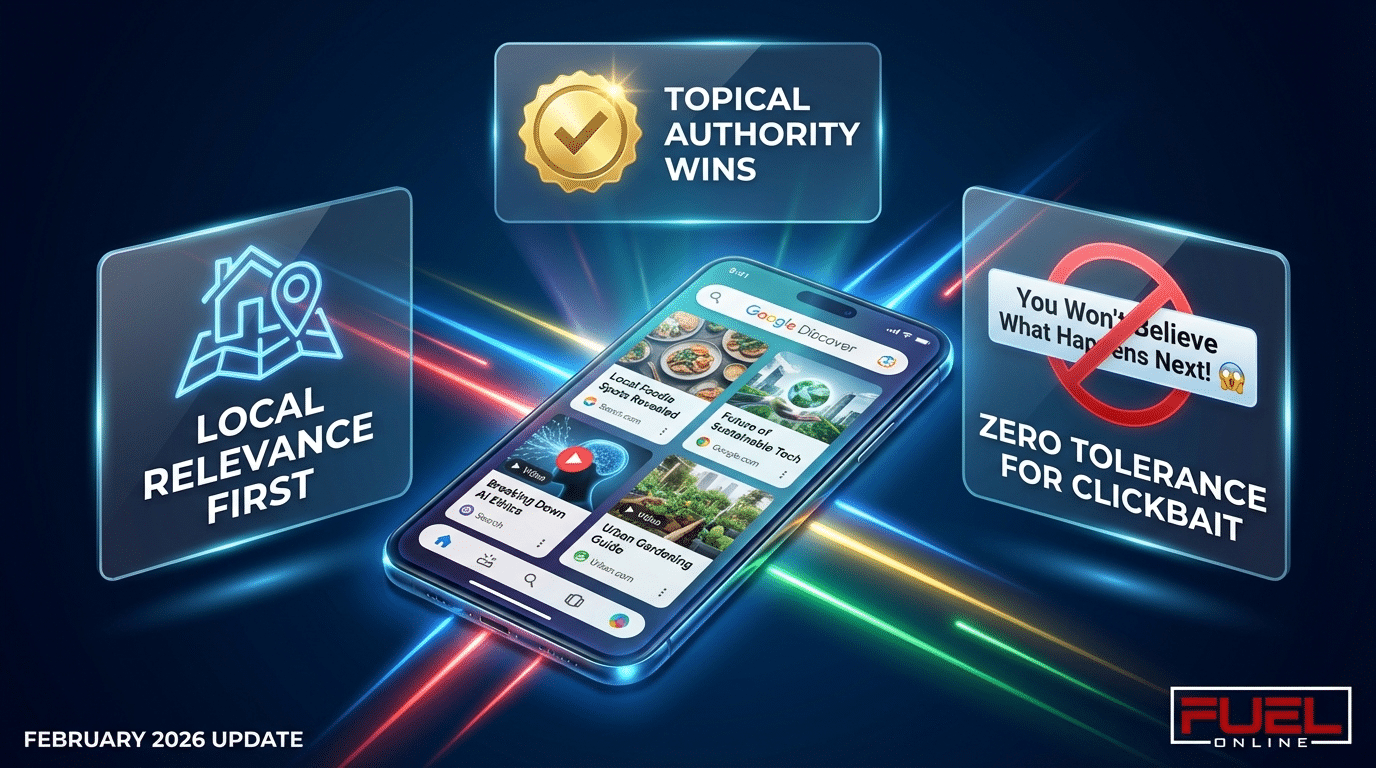
The first major shift is the Home Turf Filter, also known as hyper localization. Google is now aggressively prioritizing content from publishers based in the same country as the user. This was a central pillar of the Google Discover Core Update goals.
The second shift is the automated demotion of sensationalism. For the first time, the documentation for the Google Discover Core Update explicitly names clickbait and curiosity gaps as demotion triggers.
The third shift is Topical Consolidation. Google has moved away from Domain Authority as a blanket signal. Within the Google Discover Core Update framework, they now evaluate expertise on a topic by topic basis.
The Death of the Generalist Publisher
One of the most profound findings from the Google Discover Core Update data is a phenomenon called Topical Consolidation. While the number of unique topics in the Discover feed actually increased by 6%, the number of unique domains appearing in the Top 1000 placements dropped by over 8%.
What this means for your post Google Discover Core Update strategy is simple: Google is no longer interested in a big site that covers everything. It wants the ultimate authority on a specific niche.
The Losers of the Google Discover Core Update: Lifestyle aggregators and news sites that post thin content on 50 different categories to catch trends. The Winners of the Google Discover Core Update: Niche authorities. A local blog that only writes about gardening in the Pacific Northwest will now outrank a national news site's single article on the same topic because of the Google Discover Core Update focus on localized expertise.
The X Factor: Social Signals as Discover Fuel
One of the hidden winners of the Google Discover Core Update was X. Post update data showed a 400% increase in X posts appearing in Discover feeds, primarily from institutional and verified accounts.
Google is increasingly using real time social engagement from trusted entities as a bridge to Discover. If a major brand or verified expert posts a thread on X, that content is now four times more likely to be pulled into the Discover feed of interested users than it was before the Google Discover Core Update.
Your strategy following the Google Discover Core Update must now include a high authority social distribution plan. Google is looking for Institutional Trust, and a verified, active X account is a primary signal for that trust in 2026.
Fighting the Zero Click Decline with Personalization
As AI Overviews (AEO) continue to eat away at traditional Search traffic, Discover is the only remaining high volume surface that still drives significant outbound clicks. Capitalizing on the Google Discover Core Update requires a technical and editorial pivot.
First, you must follow the 1200px Rule. Ensure your featured images are at least 1200px wide. The Google Discover Core Update documentation confirms that large, high resolution images increase click through rates by up to 5% and are a requirement for high quality status.
Second, you must bridge the Anti Curiosity Gap. Stop using headlines like "You won't believe what happened next." The Google Discover Core Update filters detect these patterns. Instead, use declarative headlines that provide the answer but promise the depth inside.
Advanced Optimization Strategy: The Topic by Topic Audit
To win in the post Google Discover Core Update world, you must treat your site as a collection of Expertise Hubs rather than a single entity.
Start by identifying your Anchor Topics. Use Google Search Console to see where you currently have Discover impressions following the Google Discover Core Update. Build Substance Moats for those topics by creating clusters of at least ten in depth, original pieces of content.
Finally, localize the context. Even if your topic is global, add a regional layer. Mention local events, use local experts, or cite regional data. This triggers the new Geographic Relevance signal introduced by the Google Discover Core Update.
Technical Requirements for the Google Discover Core Update
While content is the primary driver, the Google Discover Core Update enforces strict technical thresholds.
Your site must have a high performance score in Core Web Vitals, specifically targeting Interaction to Next Paint (INP). Google has hinted that the Google Discover Core Update uses page experience as a tie breaker for content that has equal topical authority.
Furthermore, you must implement the max image preview large meta tag. Without this, your 1200px images will not render in the large format, significantly reducing your visibility in the wake of the Google Discover Core Update.
Capitalizing on AI Overviews and LLMs
AI models like Gemini and others use Discover feeds as a primary source for "trending" data. By winning in the Google Discover Core Update, you are essentially training the LLMs to recognize your brand as a primary source for specific topics.
To optimize for LLMs within the Google Discover Core Update environment, use structured data that defines your organization’s founders, specialized awards, and geographic location. This helps AI models verify your authority faster, ensuring your content is cited in AI Overviews.
Actionable Takeaways for Q2 2026
The Google Discover Core Update rollout is over, but the work is just beginning.
Audit your headlines for sensationalism immediately. If they use shock or vague language, rewrite them to be descriptive. The Google Discover Core Update will reward clarity over mystery.
Refresh your visuals. Replace stock photos with original, high resolution photography or custom data visualizations. The Google Discover Core Update systems are trained to recognize and prioritize unique visual assets.
Double down on local. If you are a US publisher, highlight your US based expertise. Mention your headquarters and local staff to satisfy the localization triggers of the Google Discover Core Update.
FAQ: Navigating the Google Discover Core Update
Q: My Search rankings are fine but my Discover traffic vanished. Why? A: This was a Discover only update. Your search rankings and Discover visibility are now governed by separate systems. You likely failed the new localization or topical authority checks of the Google Discover Core Update.
Q: Can AI generated content still rank after the Google Discover Core Update? A: Yes, but only if it adds incredible information gain. Google is actively demoting recycled summaries. If your AI content is just a rewrite of existing news, the Google Discover Core Update will demote it.
Q: How long should I wait before making changes? A: Google recommends waiting at least one week after a rollout completes before drawing conclusions. Since the Google Discover Core Update finished on Feb 27, you should begin your audit now.
Q: Does the Google Discover Core Update affect YouTube videos? A: Yes. The Discover feed often includes YouTube content. The same rules for localization and authority apply to video creators as they do to web publishers.
Final Thoughts on the Google Discover Core Update
The Google Discover Core Update represents the maturation of the feed. Google is no longer content with showing users whatever gets clicked. They want to show users what they can trust. By focusing on topical authority, local relevance, and transparent expertise, you can thrive in the new environment created by the Google Discover Core Update.
The "Search Only" mindset is a relic of the past. The future is personal, it is localized, and it is found in the feed.