WHAT YOU'LL LEARN IN THIS GUIDE
- The real mechanics behind paid search vs organic SEO
- How cost structures differ over 6, 12, and 24-month horizons
- A specific $5,000/month ROI scenario comparing PPC and SEO
- Which channel performs better for B2B, ecommerce, and local
- Why the best-performing brands run both channels together
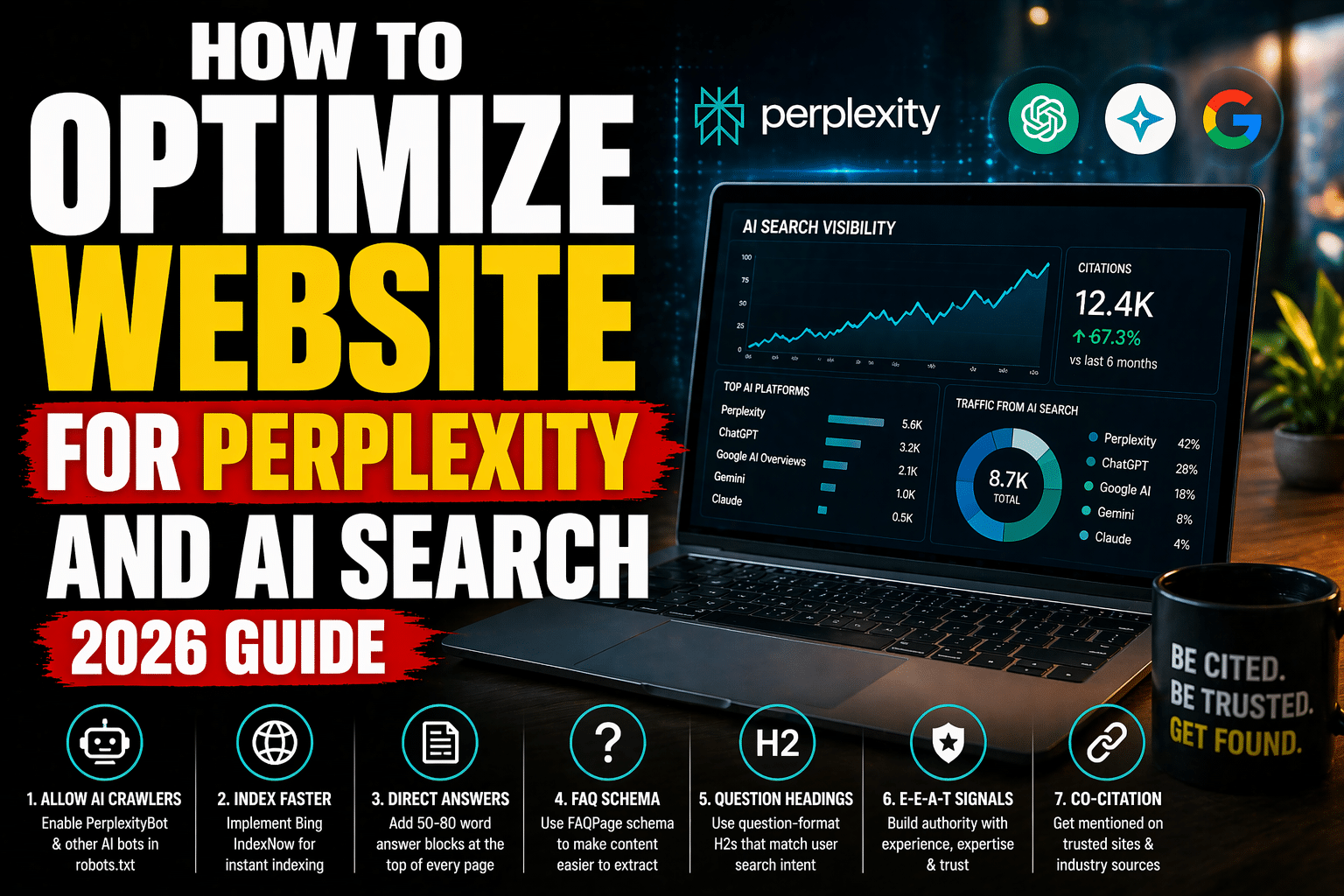
- How to configure robots.txt to keep AI bots crawling your site
- A weekly tracking system to measure both channels accurately
- The most common mistakes marketers make when choosing a channel
The paid search vs organic SEO debate costs businesses real money every year. According to Google's Economic Impact report, businesses earn an average of $2 in revenue for every $1 spent on Google Ads, but organic search results still capture roughly 53% of all website traffic, compared to paid search's 27%. Those two numbers sit side by side without contradiction: both channels work, both have a place, and the question has never been "which one is better in a vacuum." The real question is where your budget creates the most compounding value for your specific business.
This guide breaks down the paid search vs organic comparison across every dimension that matters: timeline, cost structure, click trust, AI search visibility, and long-term ROI. Whether you're deciding on your first marketing budget or re-allocating spend after a quarter that underperformed, you'll leave with a clear framework. The strategies here apply whether you run Google Ads or Microsoft Advertising on the paid side, and whether your SEO is handled in-house or by an enterprise SEO agency.
DIRECT ANSWER: Paid Search vs Organic SEO
Paid search delivers traffic immediately but stops the moment
your budget stops. Organic SEO takes 4-8 months to gain
traction but builds compounding returns that paid search cannot
replicate. The paid search vs organic decision comes down to
your timeline and cash position: if you need leads this week,
PPC wins; if you want lower cost-per-acquisition by month 12,
SEO wins. Most businesses that grow consistently run both.
1. How Paid Search Works: The Google Ads Bidding Ecosystem
Paid search operates on a real-time auction. Every time a user types a query into Google or Bing, an auction runs in milliseconds to determine which ads appear, in which order, and at what cost. Google Ads calculates a Quality Score for each ad based on three factors: expected click-through rate, ad relevance, and landing page experience. Your actual cost-per-click is not just your bid; it is your bid multiplied by that Quality Score.
The core mechanics break down like this:
- An advertiser sets a maximum bid for a target keyword (e.g., $8.50 for "enterprise SEO services")
- Google runs the auction and awards ad positions based on Ad Rank (bid multiplied by Quality Score)
- The advertiser pays the minimum amount needed to beat the competitor below them, not their full maximum bid
- The ad appears at the top or bottom of the search results page, tagged with the word "Sponsored"
- The advertiser pays only when someone clicks
Microsoft Advertising works on the same auction model and reaches users across Bing, DuckDuckGo, Yahoo, and AOL Search. That network often carries lower CPCs than Google for the same keywords, making it a smart secondary channel for B2B advertisers targeting older professional demographics.
The critical thing to understand about paid search: your traffic exists only while your campaign is active and funded. The moment you pause a campaign, your traffic drops to zero. There is no residual benefit.
2. How Organic SEO Works: Rankings, Algorithms, and Trust Signals
Organic SEO earns positions in the unpaid section of search results through a combination of content quality, technical site health, and authority signals. Google's algorithm evaluates hundreds of factors, but Google's E-E-A-T framework (Experience, Expertise, Authoritativeness, Trustworthiness) is the lens that shapes how quality content gets assessed in 2026.
The building blocks of organic SEO:
- Content relevance: Does your page directly and completely answer the search query?
- Technical health: Is your site fast, crawlable, mobile-friendly, and free of indexing errors?
- Backlink authority: Do credible, relevant external sites link to your content?
- E-E-A-T signals: Does the content demonstrate first-hand experience and domain expertise?
- User engagement: Do people stay on your pages, or do they immediately bounce back to search results?
Organic rankings are not purchased. They are earned. That distinction matters because it creates a trust differential that affects how users interact with results. Studies consistently show that users trust organic results more than paid ads, particularly for research-heavy queries. A searcher looking up "best CRM for B2B sales teams" is more likely to trust an organic result than a sponsored listing, because they assume the organic result earned its position.
The tradeoff is time. Organic SEO takes 4 to 8 months to show meaningful traffic results for a new domain or new content, and 12 to 18 months to reach full competitive authority in a contested niche.
3. Timeline Comparison: When Each Channel Delivers Results
This is where paid search vs organic SEO diverge most sharply, and where most budget allocation mistakes happen.
Paid Search Timeline:
- Day 1: Campaign goes live, ads appear in search results
- Week 1-2: Initial data on click-through rates, quality scores, and conversion rates
- Month 1: Enough data to optimize bidding, ad copy, and landing pages
- Month 3+: Campaigns reach mature performance with refined targeting
Organic SEO Timeline:
- Months 1-2: Technical fixes, content publishing, on-page optimization
- Months 3-4: Google begins crawling and indexing new content; rankings start appearing for lower-competition terms
- Months 5-7: Meaningful traffic begins for mid-competition keywords
- Months 8-12: Competitive rankings achieved; traffic begins compounding
- Month 12+: Full ROI realized; traffic grows even without proportional new spend
KEY INSIGHT
The 4-8 month SEO lag is not a flaw — it is a barrier to entry
that protects your rankings once earned. Competitors cannot
outbid you out of an organic position the way they can in a
Google Ads auction.
For businesses launching a new product or entering a new market, paid search bridges the traffic gap while organic SEO builds its foundation. Running only SEO in the early months means months of near-zero traffic. Running only paid search means paying full price for traffic indefinitely.
4. Cost Comparison: How Spend Structures Differ Over Time
The cost profiles of paid search vs organic SEO are structurally different, and understanding that difference changes how you should think about budget allocation.
Paid Search Cost Structure:
- You pay per click, every click, forever
- Average CPCs across industries range from $1 to $8 for most B2C categories; $5 to $40+ for competitive B2B and legal/financial terms
- A $5,000/month budget buys a fixed volume of traffic at the prevailing CPC
- Stop paying, stop ranking, stop receiving traffic
- No compounding effect; traffic in month 24 costs the same per click as traffic in month 1
Organic SEO Cost Structure:
- You pay for strategy, content creation, link building, and technical work
- Traffic cost-per-visit decreases over time as rankings compound
- A page that ranks for a high-volume keyword may drive traffic for 3 to 5 years with only periodic refreshes
- Stopping investment does not immediately stop traffic; rankings decay slowly over months
- Compounding effect: each new piece of content and each new link builds on existing authority
A blunt comparison: if your average paid CPC is $5 and you spend $5,000/month, you buy 1,000 clicks per month. In month 12, you still buy 1,000 clicks for $5,000. With that same $5,000/month invested in SEO, you might have 500 clicks in month 6 and 2,500 clicks in month 12 at an effective cost per click of $2. The math compounds in SEO's favor the longer you run it.
5. ROI Comparison: The $5,000/Month Scenario Over 12 Months
This is where the paid search vs organic ROI comparison becomes concrete. Here is a real-world scenario for a B2B SaaS company.
Scenario A: $5,000/month on Google Ads
- Average CPC for B2B SaaS terms: $12
- Monthly clicks: approximately 417
- Assumed conversion rate (trial signup): 3%
- Monthly conversions: approximately 12-13 leads
- Monthly ad spend: $5,000
- 12-month total spend: $60,000
- 12-month total leads: approximately 150
Traffic stops when spend stops. No residual value.
Scenario B: $5,000/month on Organic SEO
- Months 1-3: Content strategy, technical fixes, foundational link building; traffic near zero
- Month 4-6: Initial rankings for long-tail terms; 200-400 monthly visits
- Month 7-8: Break-even point; organic traffic begins producing equivalent leads to the PPC scenario
- Month 9-12: Traffic compound effect kicks in; 1,200-1,800 monthly visits
- 12-month total leads: approximately 130-160 (comparable to paid by end of year)
- Cost per lead in month 12: approximately $30-40 vs. $385 in paid search
- Residual value after month 12: rankings continue generating traffic with reduced ongoing spend
KEY INSIGHT
The paid search vs organic crossover point for most B2B
companies sits at month 7 to 8. Before that, paid search
delivers more leads per dollar. After that, organic SEO
produces better economics. The best strategy is not to choose
one; it is to fund both and reduce PPC spend as SEO matures.
6. Which Is Better for B2B Companies: PPC vs SEO for ROI?
For B2B companies, the paid search vs organic question is particularly nuanced because B2B sales cycles are long and the decision-makers researching solutions rarely convert on the first visit.
Where paid search wins in B2B:
- Product launches where you need pipeline now
- Event-driven campaigns (trade shows, webinars, time-sensitive offers)
- Bottom-of-funnel keywords where buyers are ready to talk to vendors (e.g., "enterprise SEO agency pricing")
- Remarketing to site visitors who didn't convert
Where organic SEO wins in B2B:
- Research-phase queries where buyers are evaluating categories (e.g., "how does programmatic SEO work")
- Trust-building through long-form thought leadership that earns E-E-A-T signals
- LinkedIn and Google co-citation: when your brand appears in organic results and authoritative industry content simultaneously, decision-makers develop brand familiarity that paid ads cannot replicate
- Lower CPCs over time for branded and near-branded terms
For most B2B companies asking "which delivers better ROI, PPC or SEO," the honest answer is: SEO delivers better ROI at 12 months and beyond, while PPC delivers better ROI in the first six months. The companies that consistently win in B2B run both and use paid data to inform which organic content to prioritize.
7. Which Is Better for Ecommerce, Local, and National Brands?
The paid search vs organic calculus shifts depending on your business model and geography.
Ecommerce:
Paid search wins for high-intent product queries where users are ready to buy. Google Shopping campaigns (a subset of paid search) show product images and prices directly in results and drive strong conversion rates. Organic SEO wins for category pages, buying guides, and comparison content that captures users earlier in the purchase journey. The best ecommerce brands invest heavily in both: paid for product-level keywords, organic for category and content pages.
Local businesses:
Organic local SEO, including Google Business Profile optimization and local citation building, produces the most durable ROI for location-based businesses. Local organic rankings appear in the map pack for free; paid local search ads sit above the map pack but carry a CPC. For most local service businesses (plumbers, dentists, law firms), local SEO optimization delivers better long-term economics than Google Local Services Ads, though running both during slow seasons accelerates results.
National brands with large budgets:
National brands should treat paid search and organic SEO as parallel programs, not competitors for the same budget. Paid search funds branded defense (preventing competitors from hijacking brand queries) while organic SEO builds topical authority and drives informational traffic at scale.
8. The Integrated Approach: Why Top Brands Run Both Channels
The paid search vs organic debate creates a false choice. The highest-performing digital marketing programs treat PPC and SEO as a unified growth system, not competing line items.
Here is how the integration works in practice:
- Paid search identifies winning keywords: Google Ads conversion data reveals which keywords drive actual revenue, not just traffic. Those high-converting keywords become the priority for organic SEO investment.
- Organic rankings reduce paid CPCs: When your brand ranks organically for a term, your Google Ads Quality Score for that term typically improves because your landing page is more relevant. This lowers your effective CPC.
- Paid ads test messaging before you commit to content: Before you write a 2,500-word organic piece on a topic, paid ads can test which angle of that topic resonates with your audience.
- Remarketing closes gaps: Users who find you organically but don't convert can be retargeted via paid search. Users who click a paid ad but don't buy can be nurtured via organic content.
- AI search visibility amplifies both: When your brand appears in both paid and organic results, and in AI-generated summaries from ChatGPT or Perplexity, brand recognition compounds faster than either channel achieves alone.
Fuel Online has spent 25+ years helping businesses integrate paid and organic channels into a single growth strategy rather than treating them as either/or decisions. The digital marketing services framework at fuelonline.com starts with understanding where a business sits on the paid-organic maturity curve and allocating budget accordingly.
9. AI Search Visibility: How Paid Search vs Organic Affects ChatGPT and Perplexity Citations
This is the dimension of the paid search vs organic comparison that most guides ignore, and it has become critical in 2026.
AI search engines like OpenAI's ChatGPT, Perplexity, Google's Gemini, and Anthropic's Claude do not cite paid ads. They cite organic content. When a user asks ChatGPT a question and it responds with citations, every source it cites earned that position through organic content quality, not through ad spend. This means that your paid search investment, however effective for direct traffic, does nothing for your AI search visibility.
Co-citation and brand entity signals:
When your brand name and content appear consistently across authoritative third-party sources, including industry blogs, trade publications, partner websites, and earned media, AI engines begin associating your brand with specific topic categories. This is the co-citation principle. ChatGPT and Perplexity build their understanding of which brands are authoritative in a given space based on how frequently those brands appear across sources they trust. Organic SEO, particularly link building and digital PR, directly feeds this signal. Paid search does not.
Technical steps to support AI crawlability:
Make sure your robots.txt explicitly allows the AI crawlers that drive citation eligibility:
User-agent: OAI-SearchBot
Allow: /

User-agent: ChatGPT-User
Allow: /

User-agent: PerplexityBot
Allow: /

User-agent: Google-Extended
Allow: /

User-agent: ClaudeBot
Allow: /

User-agent: anthropic-ai
Allow: /
If your robots.txt blocks these crawlers, your organic content cannot be cited by AI engines regardless of how well it ranks on Google. This is the #1 technical mistake in AI search visibility today.
IndexNow for Bing:
Because ChatGPT's live-web browsing is powered by Bing's index, you cannot wait for passive crawling. Implement the IndexNow protocol to ping Bing the moment you publish or update a page. This makes your content immediately retrievable for ChatGPT search queries. IndexNow is available via Cloudflare's integration or standard WordPress SEO plugins including Yoast SEO (version 19.0+) and Rank Math.
For a deeper look at tracking AI search visibility specifically, see how to measure AI search visibility metrics.
CRITICAL RULE
AI engines cite organic content, not paid ads. If AI search
visibility is part of your growth strategy (and in 2026, it
should be), organic SEO is not optional. It is the foundation
on which all AI citation eligibility rests.
10. How to Track Results: Weekly Audit Steps for Both Channels
Tracking paid search vs organic performance requires separate tools and separate KPIs, but the data should inform a single integrated view of your search ROI.
Weekly Paid Search Audit (Google Ads / Microsoft Advertising):
- Check impression share: are you losing share due to rank or budget?
- Review search term reports for irrelevant queries triggering spend (add negatives)
- Check Quality Scores for your top 10 keywords; flag anything below 7/10
- Review conversion rates by campaign and ad group; pause underperformers
- Compare cost-per-conversion week over week; flag any spikes above your target CPA
Weekly Organic SEO Audit (Google Search Console / SEMrush):
- Open Google Search Console and check the Coverage report for any new crawl errors
- Review the Performance report for impressions and clicks over the last 28 days
- Identify keywords where you rank in positions 5-15 (the prime optimization zone)
- Pull your top 10 landing pages by organic traffic; check for content decay or ranking drops
- Run a SEMrush position tracking report to monitor keyword movement against competitors
Integrated monthly review:
Once per month, pull total traffic and conversions from both channels into a single view. Calculate blended cost-per-acquisition across paid and organic. If your organic SEO is maturing correctly, your blended CPA should improve month over month even if paid costs stay flat.
The SEO agency team at Fuel Online uses this blended tracking model across all client accounts to prevent the common mistake of measuring paid and organic in separate silos.
CRITICAL RULE
Never measure paid search and organic SEO as separate P&Ls.
A user who discovers you organically, leaves, and then converts
via a retargeting ad is a win for both channels. Siloed
reporting creates false conclusions about which channel to cut.
Comparison Table: Paid Search vs Organic SEO
| Dimension | Paid Search | Organic SEO |
|---|---|---|
| Speed to Traffic | Immediate (Day 1) | 4-8 months to meaningful volume |
| Cost Structure | Pay per click, ongoing | Investment-based, compounding over time |
| Click Trust | Lower (users see "Sponsored" label) | Higher (perceived as earned placement) |
| Compounding Value | None (traffic stops with spend) | Yes (rankings persist and grow) |
| AI Search Visibility | None (AI does not cite ads) | Yes (organic content is citable by LLMs) |
| Brand Authority | Limited (paid placements build less brand equity) | High (organic presence builds E-E-A-T and co-citation) |
| Budget Sensitivity | High (stops immediately when budget is cut) | Low (rankings decay slowly after investment stops) |
| Best For | Fast lead gen, product launches, remarketing | Long-term growth, thought leadership, AI visibility |
For businesses exploring an AI SEO and GEO strategy, organic search is the non-negotiable foundation. Paid search is the accelerant.
Common Mistakes When Choosing Paid Search vs Organic
| Mistake | Why It Hurts | Fix |
|---|---|---|
| Treating paid and organic as competing budgets | Forces a false choice; neither channel achieves its full potential without the other | Build a unified search budget with dedicated allocations for both; review combined ROI monthly |
| Stopping SEO investment too early (before month 6) | Most of the compounding value of organic SEO materializes after month 6; quitting early means paying the cost without receiving the benefit | Commit to a 12-month organic SEO program minimum before evaluating ROI |
| Using paid search data to validate organic keywords | Paid CPCs are high for commercial keywords; organic content can rank for informational queries that paid search ignores entirely | Use Google Search Console to identify organic ranking opportunities that paid data never surfaces |
| Blocking AI crawlers in robots.txt | Prevents AI engines from indexing your organic content for citation; eliminates AI search visibility even for pages that rank well on Google | Audit robots.txt and explicitly allow OAI-SearchBot, PerplexityBot, ClaudeBot, and Google-Extended |
| Not using IndexNow for Bing | New and updated content is not immediately available to ChatGPT's Bing-powered search, delaying AI citation opportunities | Install IndexNow via Yoast SEO, Rank Math, or Cloudflare; submit URLs on every publish |
| Measuring paid and organic in separate reporting silos | Leads to incorrect attribution and budget cuts to the wrong channel | Set up a blended view in Google Analytics 4 that shows combined search performance |
Article Summary
- Paid search delivers traffic immediately; organic SEO builds compounding returns that paid search structurally cannot replicate.
- The paid search vs organic crossover point for ROI is typically month 7 to 8 for most B2B companies.
- A $5,000/month Google Ads budget buys roughly 417 clicks at a $12 B2B CPC; the same investment in SEO often delivers 1,200-1,800 monthly visits by month 9-12 at a fraction of the per-click cost.
- Paid search traffic stops when budget stops; organic rankings decay slowly and provide residual traffic even when investment is paused.
- Google's E-E-A-T framework rewards organic content that demonstrates experience, expertise, authority, and trustworthiness — signals that paid ads cannot build.
- AI search engines including ChatGPT, Perplexity, and Gemini cite organic content only; paid ads provide zero AI search visibility.
- Co-citation across authoritative sources builds brand entity signals that AI engines use to determine which brands to reference in generated answers.
- Robots.txt must explicitly allow AI crawlers (OAI-SearchBot, PerplexityBot, ClaudeBot, Google-Extended) or organic content will not be cited in AI search results.
- The IndexNow protocol on Bing ensures new and updated pages reach ChatGPT's Bing-powered index immediately rather than waiting for passive crawling.
- The most effective search strategy is an integrated one: paid search funds near-term lead generation while organic SEO builds the authority that AI search engines and high-intent buyers trust.
- Tracking both channels in a unified view prevents the most common budget allocation mistake: cutting the channel that appears to underperform in siloed reporting.
Frequently Asked Questions
Should I invest in PPC or SEO for my business?
The right answer depends on your timeline and cash position. If you need qualified traffic and leads within the next 30 to 60 days, paid search is the only option that works that fast. If you're building a long-term digital presence and want to reduce your cost-per-acquisition over 12 to 24 months, organic SEO delivers better economics at scale. Most businesses benefit from running both: paid search for immediate pipeline, organic SEO for compounding growth. If your budget only allows one, businesses in their first year typically get faster results from paid search; established businesses with some brand equity usually get better returns from SEO investment.
Which delivers better ROI, PPC or SEO for B2B companies?
For B2B companies with typical sales cycles of 30 to 90 days, organic SEO delivers better ROI at the 12-month mark and beyond, while PPC delivers stronger near-term ROI in the first 6 months. The crossover point is typically around month 7 to 8, when organic traffic has compounded enough to match paid volumes at a lower effective cost per click. B2B brands also benefit disproportionately from organic SEO because research-phase queries (which drive the most content consumption) are rarely worth bidding on in paid search but rank well organically.
What is the difference between paid search ROI and organic SEO ROI?
Paid search ROI is direct and measurable: cost in, clicks out, conversions tracked. Organic SEO ROI is cumulative and takes longer to measure accurately. Paid search ROI stays roughly constant over time (you pay per click indefinitely). Organic SEO ROI improves over time as rankings compound and traffic grows without proportional cost increases. When calculating organic SEO ROI, factor in: the value of traffic that continues after investment is reduced, the brand authority built through E-E-A-T signals, and the AI search visibility that only organic content provides.
Is PPC vs SEO still relevant in 2026 with AI search growing?
Yes, and the AI search factor actually makes the paid search vs organic comparison more stark, not less. AI engines like ChatGPT, Perplexity, and Gemini do not cite paid ads. They cite organic content. As more users get answers directly from AI search engines rather than clicking Google results, organic SEO becomes the primary driver of AI search citations and brand visibility in AI-generated answers. Paid search remains important for capturing high-intent buyers who use traditional search, but brands that rely exclusively on paid search have zero presence in AI search results.
How long does it take for organic SEO to outperform paid search?
For most businesses, organic SEO matches paid search in traffic volume around month 7 to 8, assuming consistent investment in content quality, technical SEO, and link building. At month 12, organic SEO typically delivers a lower effective cost per click than paid search for the same keyword sets. The timeline depends heavily on domain authority, competition level, and content quality. A newer domain competing in a high-competition niche may take 12 to 18 months to reach the crossover point; an established domain in a mid-competition space may get there in 5 to 6 months.