ANSWER ENGINE OPTIMIZATION | Updated March 2026 | 10 min read
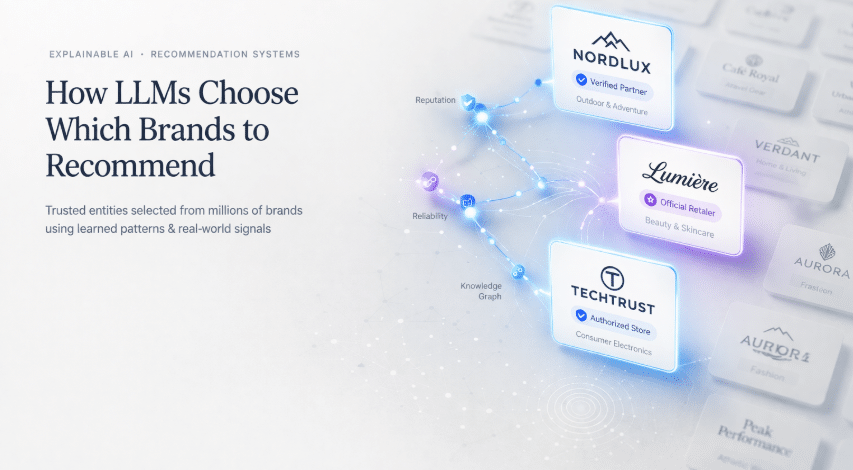
Brand entity optimization is now the single most important factor determining whether OpenAI’s ChatGPT, Google’s Gemini, Anthropic’s Claude, or any other large language model recommends your business over a competitor. The shift happened fast. When someone asks an AI "what’s the best marketing agency in New York" or "which CRM should I use for a small business," the model does not return ten blue links. It returns one to three names. Yours is either on that list or it is invisible.
This guide breaks down the exact signals that LLMs use when selecting which brands to surface. More important, it gives you a repeatable brand entity optimization playbook so your company earns those citations consistently across every major AI search platform, including OpenAI’s ChatGPT, Google’s Gemini, Perplexity, Microsoft Copilot, and Anthropic’s Claude.
1. Why LLM Brand Recommendations Have Replaced Search Rankings
Google still processes billions of queries daily. But the way people discover and choose brands is splitting in two. Monthly AI search sessions are now 56% the size of traditional search worldwide, and AI search queries surged 527% year-over-year between 2024 and 2025. When a user asks Perplexity "best project management tools for remote teams," the answer names two or three products. There is no page two. There is no scrolling.
This changes what brand entity optimization means in practice. You are no longer competing for a spot among ten organic results. You are competing for a mention inside a generated paragraph. The brands that get mentioned are the ones whose entity signals are strongest across the web.
2. The 7 Core Signals LLMs Use to Choose Which Brands to Recommend
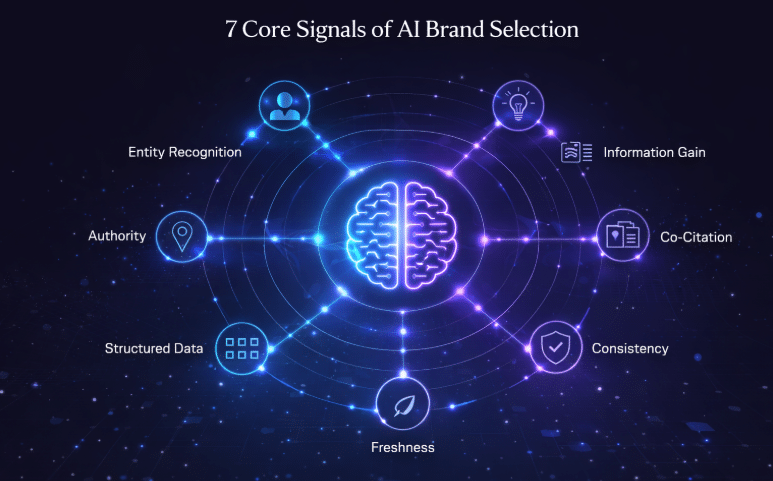
After testing hundreds of prompts across ChatGPT, Gemini, Perplexity, Claude, and Copilot, a clear pattern emerges. LLMs evaluate brands using seven entity signals before generating a recommendation. Understanding these signals is the foundation of any brand entity optimization strategy.
Signal 1: Entity Recognition in Knowledge Graphs
LLMs pull entity data from structured knowledge sources, including Google’s Knowledge Graph, Wikidata, and Wikipedia. If your brand exists as a recognized entity with defined attributes (industry, founder, location, products), the model can reference it with confidence. Brands without entity records are treated as unverified claims.
Signal 2: Source Authority and E-E-A-T
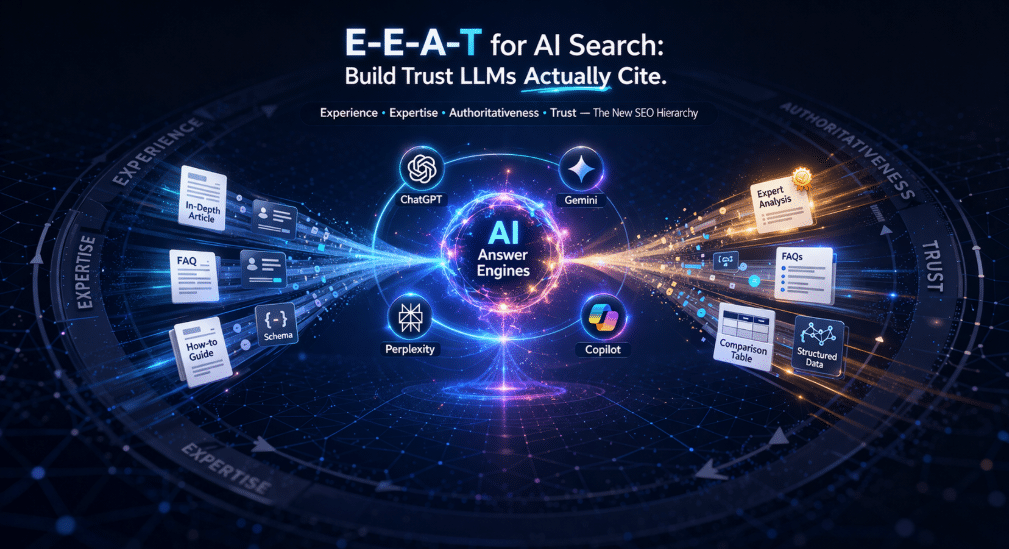
Google’s E-E-A-T framework (Experience, Expertise, Authoritativeness, Trustworthiness) does not just affect traditional rankings. LLMs trained on web data internalize these same trust patterns. Sites with strong author bios, editorial standards, and backlink profiles from authoritative domains earn higher citation rates in AI responses.
Signal 3: Information Gain Uniqueness
LLMs prioritize sources that add net-new information the model cannot derive from its training data alone. Publishing original research, proprietary benchmarks, or unique frameworks makes your content irreplaceable. Generic "top 10 tips" articles get retrieved and discarded in that 85% discard pile.
Signal 4: Co-Citation Frequency
When your brand is consistently mentioned alongside trusted industry leaders across multiple independent sources, LLMs learn to associate your entity with that category. Co-citation is not link building. It is entity association. If Forbes, HubSpot, and Search Engine Journal all mention your brand alongside Moz and Ahrefs in SEO tool roundups, the model learns that association.
Signal 5: Structured Data Clarity
Schema markup tells AI crawlers exactly what your entity is, what it does, and how it relates to other entities. Organization schema, SameAs links, and properly configured FAQ and Article schema reduce ambiguity for models parsing your pages.
Signal 6: Content Freshness and Recency
Pages not updated at least quarterly are three times more likely to lose their AI citations. LLMs favor content with recent dateModified timestamps, current statistics, and up-to-date entity references. Brand entity optimization is not a set-it-and-forget-it exercise.
Signal 7: Cross-Platform Entity Consistency
Your brand name, description, and core attributes must be identical across your website, Google Business Profile, LinkedIn, Crunchbase, social media profiles, and industry directories. Inconsistency creates entity confusion. LLMs struggle to recommend brands they cannot confidently resolve to a single entity.
3. How to Build Your Brand Entity Profile for AI Recommendations
Start with the entity foundation. Before optimizing content for AI brand visibility, you need a clean, complete entity record.
- Audit your entity presence. Search your brand name on Google's Knowledge Graph, Wikidata, and Wikipedia. If no entity record exists, create or claim one.
- Standardize your NAP+D. Name, Address, Phone, and Description must be identical across all platforms. Check LinkedIn, Crunchbase, Yelp, BBB, and all industry-specific directories.
- Implement Organization schema. Add JSON-LD Organization schema to your homepage with sameAs links pointing to every verified profile.
- Create an entity-defining page. Your About page should read like an entity record: founding date, headquarters, services offered, notable clients, awards, and leadership team with linked bios.
- Build a Wikipedia-eligible entity trail. Earn press coverage in notable publications. Wikipedia editors require independent, reliable sources before creating an article about a brand.
4. The Co-Citation Strategy That Drives LLM Brand Recommendations
Co-citation is the most underused lever in brand entity optimization. Most brands focus on backlinks. But LLMs do not count links the way Google does. They track entity associations: which brands appear together, in what context, and how frequently.
To build co-citation authority:
- Get included in industry roundups and comparison articles on high-authority publications. If your competitors are mentioned in "best X tools" lists and you are not, you are invisible in LLM brand recommendations.
- Contribute expert quotes to publications that also quote recognized industry leaders. When your CEO is quoted in the same Forbes article as the CEO of a market leader, the model associates your entities.
- Publish original research that competitors and media cite. When other sites reference your data alongside established brands, co-citation happens naturally.
- Create comparison content on your own site that explicitly names competitor entities. Write "Our Platform vs. Competitor A vs. Competitor B" content with honest, structured comparisons. LLMs extract these comparisons directly.
5. Schema Markup That Strengthens Your Entity for AI Search
Schema markup is the machine-readable layer that removes ambiguity from your entity profile. For brand entity optimization, three schema types are non-negotiable.
| Schema Type | Best Used For | AI Citation Benefit | Critical Properties |
|---|---|---|---|
| Organization | Homepage, About page | Defines your entity clearly for knowledge graphs | name, url, sameAs, description, founder, foundingDate |
| Article / BlogPosting | Every content page | Ties content to your entity with author and publisher data | headline, author, publisher, datePublished, dateModified |
| FAQPage | Every article with Q&A | Provides extractable question-answer pairs for LLMs | name (question), acceptedAnswer (answer) |
| SameAs (within Organization) | Homepage | Links your entity to all verified profiles | Array of URLs: LinkedIn, Crunchbase, Wikipedia, socials |
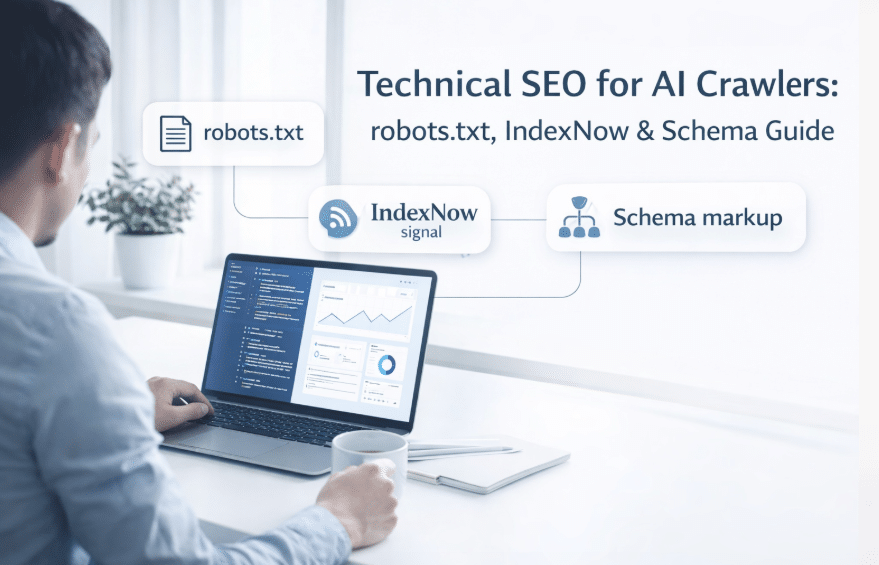
6. Robots.txt and IndexNow: The Technical Gates for AI Brand Visibility
None of your brand entity optimization work matters if AI crawlers cannot access your content. Check your robots.txt file immediately. If any of these bots are blocked, your content is invisible to the platforms that drive LLM brand recommendations.
User-agent: OAI-SearchBot
Allow: /

User-agent: ChatGPT-User
Allow: /

User-agent: PerplexityBot
Allow: /

User-agent: Google-Extended
Allow: /

User-agent: ClaudeBot
Allow: /

User-agent: anthropic-ai
Allow: /
Because ChatGPT's live-web browsing is powered by Bing's index, you cannot wait for passive crawling. Implement the IndexNow protocol to ping Bing the moment you publish or update a page. This makes your content immediately retrievable for ChatGPT search queries. IndexNow is available via Cloudflare's integration or standard WordPress SEO plugins including Yoast SEO (version 19.0+) and Rank Math.
7. How to Track Your AI Brand Visibility and LLM Brand Recommendations
You cannot improve what you do not measure. Brand entity optimization requires a structured tracking process.
Weekly Prompt Audit Process:
- Compile 15 to 20 brand-relevant prompts that your target audience would type into AI platforms. Include transactional queries ("best X for Y"), informational queries ("how does X work"), and comparison queries ("X vs Y vs Z").
- Run each prompt on ChatGPT, Gemini, Perplexity, Claude, and Copilot.
- Record whether your brand is mentioned, cited with a link, or absent.
- Track competitor mentions in the same responses.
- Calculate your Share of Voice: (your mentions / total brand mentions in responses) x 100.
- Log results weekly to identify trends.
Content Refresh Cycle:
Update every published page at minimum quarterly. Refresh statistics, verify entity references, update dateModified in your schema, and resubmit to Bing via IndexNow. Pages not updated quarterly lose AI citations at 3x the rate of regularly maintained content.
Competitive Gap Analysis:
For every prompt where a competitor is mentioned and you are not, analyze why. Check their entity profile, co-citation pattern, content freshness, and schema implementation. The gap between their brand entity optimization and yours is exactly what you need to close.
8. Common Mistakes That Kill LLM Brand Recommendations
| Mistake | Why It Hurts | Fix |
|---|---|---|
| No entity record on Wikidata or Knowledge Graph | LLMs cannot verify or confidently name your brand | Create structured entity records on Wikidata, claim your Google Knowledge Panel |
| Inconsistent brand name across platforms | Entity confusion prevents LLMs from resolving your brand to a single entity | Standardize name, description, and attributes across all profiles |
| Blocking AI bots in robots.txt | Your content is invisible to ChatGPT, Perplexity, Claude, and Copilot crawlers | Allow all AI crawlers explicitly |
| No structured data / generic schema | AI crawlers cannot parse your entity attributes reliably | Implement custom Organization, Article, and FAQPage schema |
| Publishing generic, commoditized content | LLMs discard the 85% of retrieved pages that offer no information gain | Add original data, proprietary frameworks, and unique analysis |
| No co-citation signals | Your brand is not associated with the category leaders LLMs already trust | Earn mentions in industry roundups, publish comparison content, contribute expert quotes |
| Stale content with no freshness signals | Quarterly-plus gaps in updates cause 3x higher citation loss | Refresh pages quarterly, update dateModified schema, resubmit via IndexNow |
Article Summary
- Brand entity optimization is the practice of engineering your digital presence so LLMs recognize, trust, and recommend your brand in AI-generated answers.
- LLMs choose which brands to recommend based on 7 core signals: entity recognition, source authority, information gain, co-citation frequency, structured data, content freshness, and cross-platform consistency.
- Only 15% of pages retrieved by ChatGPT during inference are cited in the final response. The rest are evaluated and discarded.
- AI search queries surged 527% year-over-year, and monthly AI search sessions are now 56% the size of traditional search globally.
- Co-citation is the fastest lever for LLM brand recommendations. Get your brand mentioned alongside category leaders across independent sources.
- Organization schema with SameAs links, Article/BlogPosting schema with dateModified, and FAQPage schema are the three non-negotiable schema types.
- AI crawler access (robots.txt) and Bing IndexNow integration are technical prerequisites. Without them, brand entity optimization efforts are wasted.
- Pages not updated quarterly are 3x more likely to lose AI citations. Build a structured content refresh and prompt audit cycle.
- Track your AI brand visibility weekly across ChatGPT, Gemini, Perplexity, Claude, and Copilot using a standardized prompt audit process.
- Brand entity optimization is not a one-time project. It is an ongoing discipline that compounds over time as your entity signals strengthen across the web.
Frequently Asked Questions
What is brand entity optimization and why does it matter for AI search?
Brand entity optimization is the process of building and strengthening your brand's digital entity signals so that large language models like ChatGPT, Gemini, and Perplexity recognize your business, trust it, and recommend it in AI-generated responses. It matters because AI search is rapidly replacing traditional search for brand discovery. With AI search queries growing 527% year-over-year, brands that lack strong entity profiles are being excluded from the answers that drive purchase decisions. Brand entity optimization ensures your business earns citations rather than being filtered out during the LLM inference process.
How do LLMs decide which brands to recommend in their answers?
LLMs evaluate brands using seven core signals: entity recognition in knowledge graphs, source authority based on E-E-A-T patterns, information gain uniqueness, co-citation frequency with trusted industry leaders, structured data clarity through schema markup, content freshness via dateModified timestamps and recency signals, and cross-platform entity consistency across directories, social profiles, and business listings. Brands that score high across all seven signals appear in the 15% of content that earns actual citations in AI responses.
What is co-citation and how does it affect LLM brand recommendations?
Co-citation occurs when multiple independent sources mention your brand in the same context as recognized category leaders. Unlike traditional link building, co-citation builds entity associations within LLMs. When Forbes, Search Engine Journal, and HubSpot all mention your agency alongside Moz and Ahrefs, the model learns that your brand belongs in the SEO tools category. This directly increases the probability that LLMs will include your brand when answering queries related to that category.
How long does brand entity optimization take to show results in AI search?
Brand entity optimization results vary based on your starting entity profile strength. Brands with existing Wikipedia entries, strong Knowledge Graph presence, and active press coverage can see improvements in LLM brand recommendations within 4 to 8 weeks of implementing structured data, co-citation campaigns, and content freshness protocols. Brands building entity profiles from scratch should expect a 3 to 6 month timeline before consistent AI citations appear, since LLMs need to encounter your strengthened entity signals across multiple training and retrieval cycles.
Which schema markup types are most important for brand entity optimization?
Three schema types form the foundation of brand entity optimization: Organization schema (with sameAs links to all verified profiles), Article or BlogPosting schema (with author, publisher, datePublished, and dateModified properties), and FAQPage schema (with extractable question-answer pairs). Organization schema defines your entity for knowledge graphs. Article schema ties your content to your entity with recency signals. FAQPage schema provides direct extraction targets for LLMs answering user questions. All three must be custom-populated with real entity data, never templated generically.