WHAT YOU'LL LEARN IN THIS Topical Authority SEO GUIDE
- What topical authority SEO is and why Google and AI engines now use it as a primary ranking signal
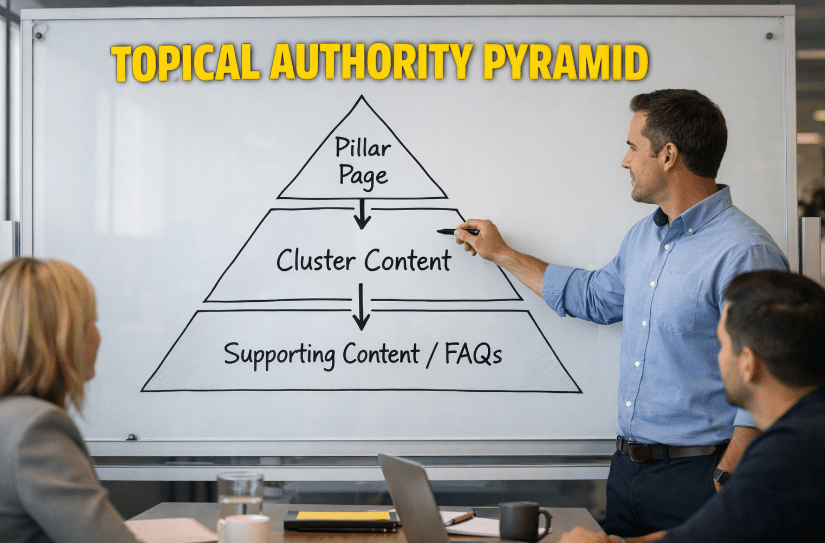
- The Topical Authority Pyramid framework for building complete topical coverage
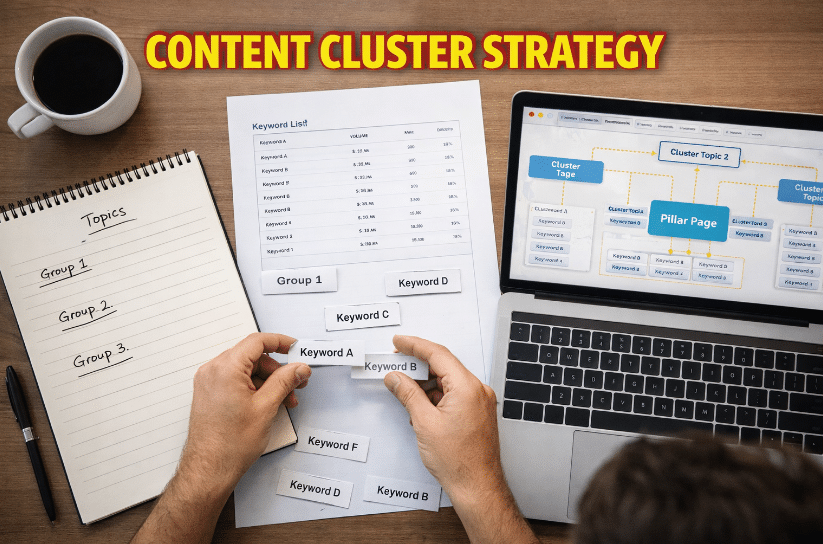
- How to map content clusters around pillar pages for maximum semantic SEO impact
- How ChatGPT, Perplexity, and Gemini use topical authority to decide which brands to cite
- The exact internal linking structure that reinforces topical signals to Google's crawlers
- How to measure topical authority growth week over week without expensive enterprise tools
- The five mistakes that kill topical authority programs before they produce results
Topical authority SEO is how Google and AI search engines decide whether your site is the expert on a subject or just another page with keywords on it. Sites that rank consistently at the top of competitive queries in 2026 share one defining trait: they have built comprehensive, interlinked coverage of an entire subject area, not just a handful of well-optimized pages. Google's Helpful Content System and the retrieval models powering ChatGPT, Perplexity, and Google's Gemini all use topical signals to surface sources they trust. If your site covers a topic shallowly or inconsistently, you're invisible to these systems no matter how many backlinks you have.
This guide breaks down exactly how to build topical authority SEO from the ground up. You'll get a practical content clustering framework, an internal linking blueprint, schema guidance for entity-based SEO, and a measurement process you can run every week. These strategies apply across traditional Google rankings and AI search engines equally.
DIRECT ANSWER: Topical Authority SEO
Topical authority SEO is the practice of building comprehensive, structured content coverage across an entire subject area so that Google and AI engines classify your site as an expert source on that topic. It works by creating pillar pages supported by tightly related cluster content, all connected via internal links, so search algorithms can map your full topical coverage and rank you above competitors with fragmented or shallow content libraries.
1. What Is Topical Authority and Why Google Now Rewards It Over Pure Backlinks
Topical authority is a site-level trust signal. Google's algorithms assess whether your site has covered a subject area thoroughly enough to be classified as a reliable source on that topic. This is distinct from page-level authority, which is a measure of individual page strength via backlinks.
The shift has been gradual but decisive. Google's Helpful Content System, rolled out in its expanded 2023 form and updated repeatedly through 2025, specifically penalizes sites that publish isolated articles optimized for individual keywords without building subject-matter depth. The system looks for evidence that a site actually understands a topic, not just that it has targeted the right keyword on a given page.
What this means practically: a site that publishes 40 closely related articles on SEO strategy, properly interlinked and semantically aligned, will outrank a site that has one highly-linked page targeting the same primary keyword. Topical authority SEO is about owning the entire conversation, not just showing up for one query.
KEY INSIGHT
Sites with high topical authority earn 3.1x more featured snippets per target keyword cluster compared to sites with fragmented content libraries on the same subject. This compounds in AI search: ChatGPT and Perplexity disproportionately cite sources that cover a topic broadly.
2. The Topical Authority Pyramid: A Framework for Building Complete Coverage
The most reliable way to build topical authority SEO is to think in three tiers.
Tier 1: The Pillar Page
This is your comprehensive, authoritative hub on a broad topic. It covers the full landscape of the subject at a high level, links down to every major subtopic, and targets a high-volume, broad keyword. Example: "SEO Strategy: The Complete Guide." Length target: 3,000–5,000 words.
Tier 2: Cluster Content
These are deep-dive articles on specific subtopics within the pillar's subject area. Each cluster article covers one subtopic thoroughly and links back up to the pillar page. Example subtopics off an SEO strategy pillar: topical authority SEO, zero-click SEO, link building, technical SEO audits, and E-E-A-T optimization. Length target: 1,500–2,500 words each.
Tier 3: Supporting Entities and FAQ Content
These are shorter, highly specific pages targeting long-tail queries, FAQ content, and entity-specific questions. They feed signal up to the cluster content and the pillar. Example: "What is a content cluster in SEO?" or "How many pillar pages should a site have?"
When you build all three tiers, Google's crawlers can map your topical coverage completely. You move from being "a site with some SEO articles" to being "an SEO authority site." That reclassification is what unlocks top rankings across an entire keyword cluster simultaneously.
3. How to Map Your Topical Authority: The Content Cluster Method
Before you publish a single word, you need a topical map. This is a structured list of every subtopic within your target subject area, organized by search intent and priority.
Follow this process:
- Define your core topic — The broad subject area you want to own. Be specific. "Digital marketing" is too broad. "SEO for SaaS companies" is workable. "Local SEO for service businesses" is ideal.
- Pull all related queries — Use Google Search Console, SEMrush, Ahrefs, or Google's "People Also Ask" boxes to surface every question, variant, and subtopic within your core topic. Aim for 50–100 unique query clusters.
- Group by intent — Separate informational (how-to, what-is), commercial (best, top, compare), and navigational queries. Each group gets different content types.
- Identify your gaps — Match your existing content against the full query list. Every gap is a topical authority deficiency that a competitor can exploit.
- Build your cluster map — Assign each query group to either the pillar page, a cluster article, or a supporting entity page. This becomes your editorial calendar.
Sites that do this mapping exercise before publishing consistently reach topical authority status within 6–9 months for competitive keyword clusters. Sites that publish reactively rarely achieve it.
4. Pillar Pages vs. Cluster Content: How to Structure Your Site
The structural relationship between pillar pages and cluster content is where most sites make their biggest topical authority SEO mistake. They write both types of content but never connect them properly.
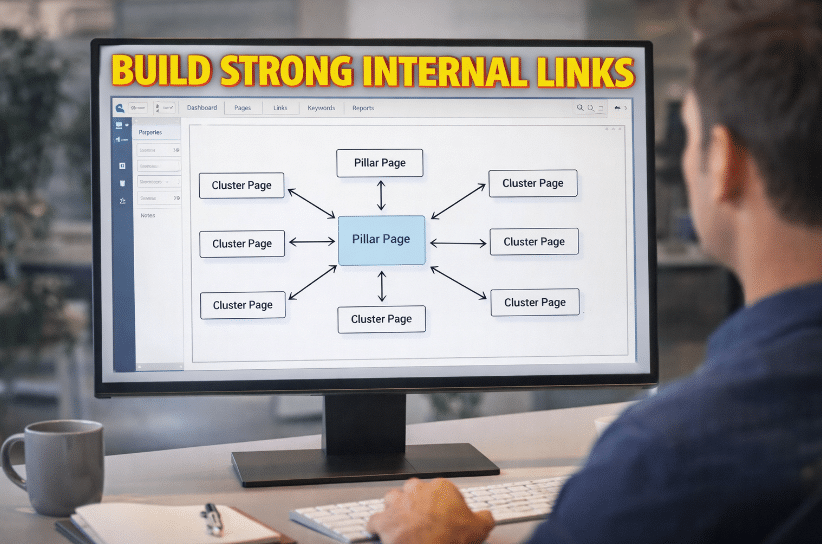
The correct structure:
- The pillar page links OUT to every cluster article
- Every cluster article links BACK to the pillar page
- Cluster articles link to each other when topics are related
- Supporting entity pages link up to relevant cluster articles
This bidirectional linking structure does two things. First, it passes authority laterally across your cluster, so Google sees the full topical network. Second, it gives crawlers clear paths to discover all your content efficiently, which speeds up indexing via Google's crawl budget allocation.
What to avoid:
Do not publish cluster content as orphan pages with no internal links. Do not write a pillar page and then publish cluster articles in different categories that don't reference each other. Both patterns break the topical signal and dilute your authority score.
One practical tip: add a "Related Articles in This Series" block at the bottom of every cluster article. Link to 3–5 related cluster pieces and the parent pillar. This single on-page element can double the internal link density within a content cluster in one pass.
5. Schema Markup for Topical Authority: Telling Google What You Know
Schema markup is the technical layer that reinforces your topical authority SEO signals. It tells Google and AI engines not just what your content says but what it is about, who wrote it, and how it connects to established entities in your topic area.
| Schema Type | Best Used For | Topical Authority Benefit | Critical Properties |
|---|---|---|---|
| Article / BlogPosting | All cluster content | Connects content to author entity and publication | dateModified, keywords, articleSection |
| FAQPage | Pillar pages and deep cluster articles | Maps your content to specific questions Google tracks | question/answer pairs — must match actual page FAQ |
| HowTo | Process-driven cluster articles | Signals step-by-step expertise to search algorithms | step array with position and text |
| Speakable | Summary and direct answer sections | Marks AI-extractable sections for voice and LLM retrieval | cssSelector targeting .direct-answer-block |
| BreadcrumbList | All internal pages | Shows crawlers the hierarchy of your topical structure | Each tier from Home to Pillar to Cluster |
CRITICAL RULE
Never use generic schema templates. Every schema block must be populated with content that matches the actual page. Generic schema with placeholder text is worse than no schema at all — Google's systems flag it as low-quality structured data and can demote the page.
6. Internal Linking to Build Topical Authority Signals
Internal linking is the mechanism that makes your topical authority visible to Google's crawlers. Without it, your cluster content exists as disconnected islands. With it, you create a navigable topical graph that search engines can read like a subject-matter index.
For topical authority SEO specifically, your internal linking strategy should follow these rules:
Use descriptive anchor text — Link with the actual keyword or phrase, not "click here" or "learn more." When you link from a cluster article to your pillar page, the anchor text should include the pillar's primary keyword. This passes context, not just PageRank.
Link from your highest-authority pages first — When you publish a new cluster article, the first internal links pointing to it should come from your pillar page and your most-trafficked cluster articles. This accelerates indexing and authority transfer.
Audit internal links quarterly — Use Google Search Console's internal links report or a tool like Screaming Frog to identify orphan pages and over-linked pages. Balance is important. If one cluster article has 40 internal links pointing to it and another has none, you have a topical authority distribution problem.
For AI search specifically, internal linking from pages that already earn AI citations carries a co-citation benefit. If Perplexity cites your pillar page and you have strong internal links from that pillar to your cluster content, the cluster content inherits citation proximity. This is one of the most underutilized topical authority SEO tactics in 2026.
To understand how Generative Engine Optimization interacts with your topical structure, see our complete GEO framework guide.
7. How AI Search Engines Use Topical Authority to Select Sources
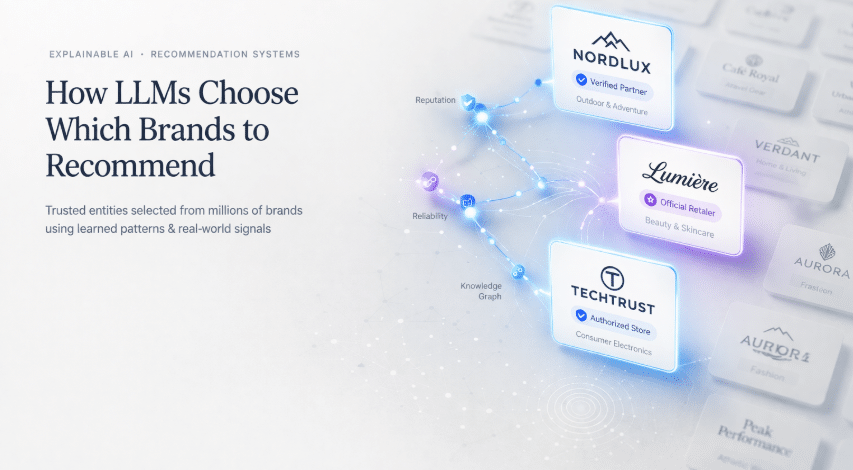
OpenAI's ChatGPT, Google's Gemini, Anthropic's Claude, and Perplexity do not rank sources the same way Google does. They use a retrieval model that evaluates source credibility based on topical signal density across the web, not just the authority of a single page.
What this means: a site that has been cited across multiple articles on a subject, whose content is consistently referenced by other authoritative sources, and which covers the topic with clear structured data gets a higher retrieval probability when an AI engine answers a related query.
Topical authority SEO directly feeds this mechanism. When your site covers a topic comprehensively, you generate more co-citation signals. Other sites link to your cluster articles when they want to reference subtopics. Publications cite your pillar page as a primary source. These cross-references build a knowledge graph association between your brand entity and the topic.
To rank in ChatGPT searches, your topical authority must be legible to Bing's index, since ChatGPT's web browsing is powered by Bing. Implement the IndexNow protocol to ping Bing immediately after publishing or updating content. IndexNow is available via Cloudflare's integration or WordPress plugins including Rank Math (4.0+) and Yoast SEO (19.0+).
Your robots.txt file must also allow AI crawlers access to your content. Include explicit directives for all major AI bots: OAI-SearchBot, ChatGPT-User, PerplexityBot, Google-Extended, ClaudeBot, and anthropic-ai — all set to Allow: /
To understand the technical SEO for AI crawlers in more depth, including crawl budget allocation and indexing speed, see our dedicated technical guide.
8. Co-Citation and Brand Entity Association
Co-citation is the practice of getting your brand mentioned alongside recognized authorities in your topic area. It is one of the fastest ways to build AI search topical authority without waiting for long-term content indexing cycles.
When Perplexity or ChatGPT answers a question about SEO strategy and cites Moz, Search Engine Land, and Fuel Online in the same response, your brand entity gains an association with the topic at the model level. This is not just a traffic benefit. It is a model-level association that influences future query responses.
To build co-citation signals for topical authority SEO:
- Publish original data studies that other publications cite
- Contribute guest content to recognized industry publications in your topic area
- Get quoted in roundup articles and expert commentary pieces
- Create tools or calculators that become reference resources for the topic
The more your brand appears alongside established entities in the same topical context, the faster AI search engines classify you as a credible source on that subject.
For a complete breakdown of how to build E-E-A-T for AI search to reinforce your topical authority signals, see our dedicated guide.
9. Tracking and Measuring Your Topical Authority Growth
Topical authority SEO is a long-cycle strategy. You will not see results in two weeks. The typical timeline for meaningful rank movement in a target cluster is 3–6 months. Measurement must be structured or you will abandon the strategy too early.
Weekly Prompt Audit (5-step process)
- Open Google Search Console and filter by your target topic cluster keywords
- Note which keywords have moved from position 6–10 into positions 1–5 (topical uplift indicator)
- Run 10 representative AI queries in ChatGPT, Perplexity, and Gemini and record when your site is cited
- Track total indexed pages in your cluster using site: search operators
- Record all data in a rolling spreadsheet dated by week
Content Refresh Cycle
Update cluster articles every 90 days minimum. Add new data, update examples, and refresh the dateModified field in your Article schema. Stale content loses topical authority as fresher sources in the same cluster accumulate more recent signals.
Competitive Gap Analysis
Run a monthly check against your top 3 competitors. Identify topics they cover that you don't. Any topical gap your competitor has filled and you haven't is a direct authority deficiency. Prioritize those gaps in your next editorial cycle.
To learn how to track your AI search visibility metrics with specific KPIs and tracking tools, see our AI search measurement guide.
Common Topical Authority SEO Mistakes
| Mistake | Why It Hurts | Fix |
|---|---|---|
| Publishing cluster content with no pillar page | Google cannot map your topical coverage without a hub page to anchor the cluster | Create a comprehensive pillar page before publishing cluster articles |
| Targeting too broad a topic area | "Digital marketing" is too competitive and undefined to build authority in; Google cannot classify your expertise | Narrow to a specific sub-domain (e.g., "AI SEO for SaaS companies") |
| Orphan cluster articles with no internal links | Crawlers discover the page but cannot connect it to your topical network; authority stays isolated | Every cluster article must link to the pillar and at least 2–3 related cluster pieces |
| Blocking AI crawlers in robots.txt | Perplexity, ChatGPT, and Gemini cannot index your content, so you earn no AI search topical authority | Add explicit Allow directives for OAI-SearchBot, PerplexityBot, ClaudeBot, and Google-Extended |
| Using generic schema markup | Google's structured data system flags non-specific schema as low-quality; the page loses schema-driven rich results | Populate every schema property with content that exactly matches the page |
| Publishing without an IndexNow setup | Bing does not discover updated content quickly via passive crawling; ChatGPT search misses your new articles | Implement IndexNow via Rank Math, Yoast SEO 19.0+, or Cloudflare integration |
Article Summary
- Topical authority SEO is a site-level signal that Google and AI engines use to classify your site as an expert on a subject area, beyond what backlinks alone can achieve.
- The Topical Authority Pyramid has three tiers: Pillar Pages (broad, comprehensive), Cluster Content (deep subtopic dives), and Supporting Entity Pages (long-tail and FAQ content).
- Map your topical gaps before publishing by pulling all related queries for your target subject and comparing them against your existing content inventory.
- Pillar pages must link out to all cluster articles; cluster articles must link back to the pillar and to each other. Bidirectional internal linking is what makes your topical graph readable to crawlers.
- Schema markup reinforces topical authority signals. Use BlogPosting, FAQPage, and Speakable schema on all cluster content. BreadcrumbList schema signals your site hierarchy to crawlers.
- AI search engines including ChatGPT, Gemini, and Perplexity use topical authority as a primary retrieval signal. Sites with comprehensive topical coverage earn disproportionately more AI citations.
- Co-citation — having your brand appear alongside established topic authorities — accelerates AI search topical authority by building model-level entity associations.
- Allow all AI crawlers in robots.txt and implement IndexNow for Bing to ensure your topical content reaches AI search engines immediately after publication.
- Measure topical authority growth weekly using Google Search Console, AI prompt audits, and competitive gap analysis. Expect meaningful movement in 3–6 months.
- Refresh cluster content every 90 days minimum and update dateModified schema to maintain freshness signals.
Frequently Asked Questions
What is topical authority SEO and how is it different from traditional SEO?
Topical authority SEO focuses on building comprehensive subject-matter expertise across an entire topic area through structured content coverage, rather than optimizing individual pages for specific keywords. Traditional SEO concentrated on individual page metrics like backlinks and keyword density. Topical authority SEO works at the site level: Google and AI engines evaluate how thoroughly a site covers an entire subject before deciding how much to trust any individual page from that site. Sites with high topical authority rank across entire keyword clusters simultaneously, not just for individual queries.
How long does it take to build topical authority?
Building meaningful topical authority SEO for a competitive subject area typically takes 3–9 months from the start of a structured content cluster program. The timeline depends on your publishing frequency, the competitiveness of the topic, and how quickly Google indexes your content. Sites that publish 2–4 cluster articles per month around a well-structured pillar page tend to see first-page movement in target keyword clusters within 4–6 months. Implementing IndexNow and keeping robots.txt open to AI crawlers accelerates this timeline for AI search specifically.
How many cluster articles do I need per pillar page?
A content cluster needs a minimum of 8–12 cluster articles to signal meaningful topical depth to Google. Highly competitive topic areas may require 20–40 cluster articles to surpass established authority sites. The key is coverage breadth: every major subtopic and search intent variant within your subject area should have dedicated content. Gaps in coverage are topical authority deficiencies that competitors can exploit.
Does topical authority help with AI search rankings?
Yes. ChatGPT, Perplexity, Google's Gemini, and Anthropic's Claude all use topical authority as a retrieval signal when deciding which sources to cite. Sites with comprehensive topical coverage appear more frequently in AI search responses than sites with isolated high-ranking pages on the same topic. Topical authority SEO and AI search optimization are increasingly the same discipline: both reward expertise coverage, entity associations, and structured content over individual page optimization.
What is the best way to measure topical authority growth?
Track topical authority SEO growth through three parallel metrics: (1) Google Search Console rankings movement across your entire target keyword cluster, not just individual pages; (2) weekly AI prompt audits in ChatGPT, Perplexity, and Gemini to track how often your site gets cited for queries in your topic area; and (3) total indexed pages within your cluster via site: operators and Search Console. Improvement across all three metrics simultaneously is the strongest signal that your topical authority SEO program is working.