WHAT YOU'LL LEARN IN THIS GUIDE
- The 8 ranking signals Google uses to position your GBP listing in local pack results
- How to write a business description that earns placements in Google AI Overviews
- The exact photo and post cadence that drives engagement signals and citation frequency
- Schema markup setup that makes your GBP data readable by ChatGPT, Perplexity, and Gemini
- How AI search is reshaping local discovery and what to do before your competitors notice
- A weekly GBP maintenance checklist to hold your rankings through algorithm updates
- The five most common GBP mistakes that tank map pack rankings (and the exact fixes)
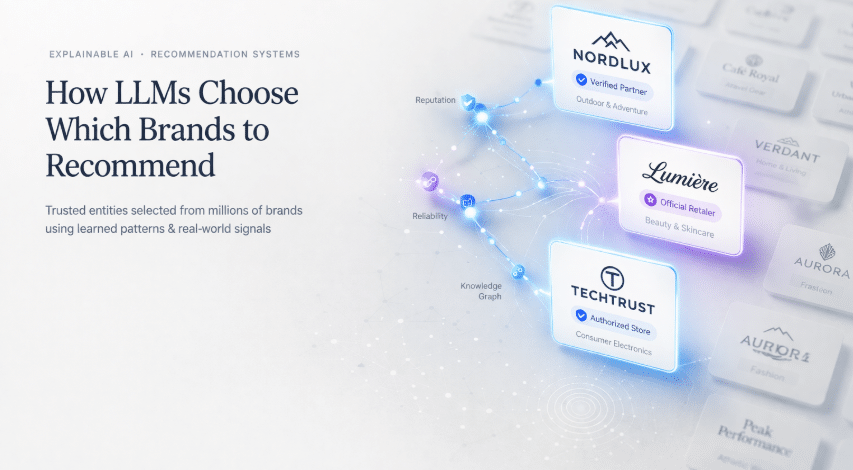
Google Business Profile optimization in 2026 is no longer just about filling out your listing. Google now treats GBP as a structured data source for both local pack rankings and AI-generated answers -- meaning the same profile that earns you a map pack position is also the one that gets cited in Google's AI Overviews, Gemini responses, and localized ChatGPT results powered by Bing.
This guide covers every element of Google Business Profile optimization 2026 that directly affects your local search visibility: ranking signals, content strategy, schema alignment, review management, and the AI-era additions most local businesses have not implemented yet. Whether you run a single-location business or manage GBP at scale across dozens of clients, these are the strategies that move the needle this year.
DIRECT ANSWER: Google Business Profile Optimization 2026
Google Business Profile optimization in 2026 requires completing all structured data fields, publishing weekly GBP posts with keyword-rich content, earning consistent five-star reviews with owner responses, and aligning your website schema with your GBP data so Google's AI systems can verify your business entity across both signals. Profiles that achieve this cross-verification consistently rank in the top three map pack positions and earn citations in Google AI Overviews.
1. Why Google Business Profile Optimization Still Dominates Local Search in 2026
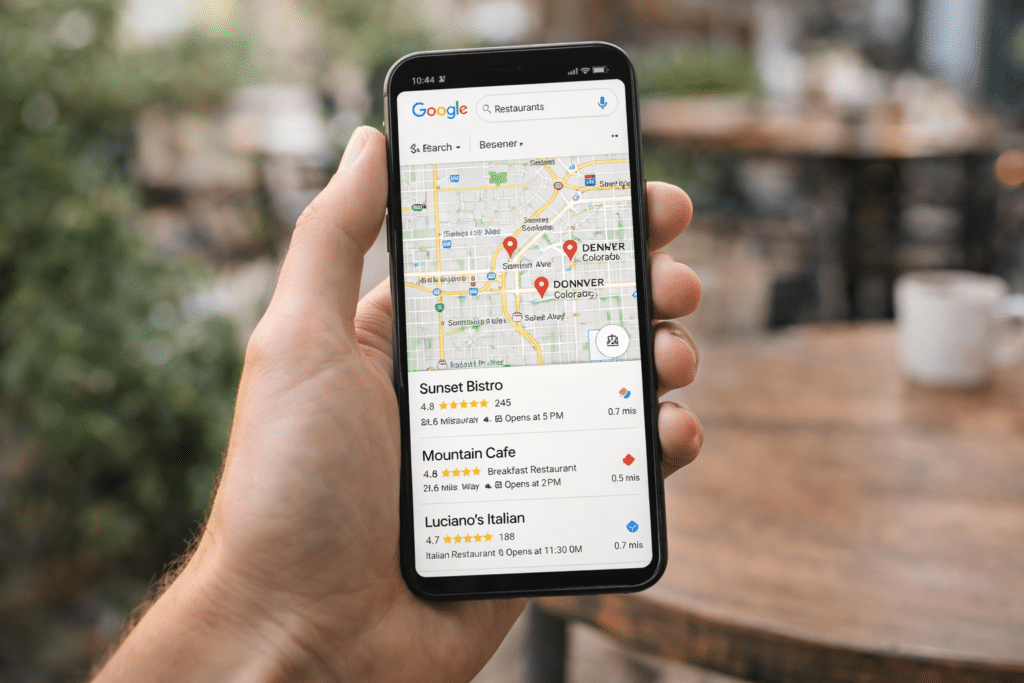
Local search has not moved away from Google. Despite growth in AI-native search tools, Google still processes over 8.5 billion searches per day, and roughly 46% of those carry local intent. When someone types "best HVAC company near me" or "Italian restaurant downtown Boston," Google's local pack is the first thing they see, and your Google Business Profile optimization 2026 strategy determines whether you appear in those three positions.
What has changed is the layer underneath. Google now uses GBP data as input for its Gemini-powered AI Overviews. A well-optimized profile does not just earn map pack placement -- it feeds structured facts about your business into the AI response layer that appears above organic results. Businesses that optimize only for the map pack and ignore AI Overview inclusion are leaving the top of the SERP entirely to competitors. For a deeper look at generative engine optimization and how AI layers are reshaping search, that guide covers the full picture.
The proximity signal still matters. Google uses the searcher's physical location to determine relevance, which means you cannot rank in neighborhoods where you have no physical presence through GBP alone. But among businesses within the eligible radius, profile completeness, relevance signals, and activity score are the three factors that separate rank one from rank three from not appearing at all.
KEY INSIGHT
Google's local ranking algorithm weights three factors: Relevance (does your profile match the query?), Distance (how close is the business to the searcher?), and Prominence (how well-known is the business?). Your GBP optimization 2026 strategy must actively improve all three, not just completeness.
2. The 8 Critical Google Business Profile Ranking Signals in 2026
Google Business Profile optimization 2026 comes down to eight core signals. Get all eight right and you are consistently in the top three. Miss two or more and you are invisible for anything more competitive than a branded search.
Signal 1: Primary and Secondary Categories
Category selection is the single highest-impact field in your GBP. Your primary category tells Google exactly what business type you are. Use Google's autocomplete to find the most specific available category. Then add secondary categories for every legitimate service you offer.
Signal 2: Business Name Consistency
Your business name on GBP must match exactly how it appears in your website's schema, your Bing Places listing, Apple Maps, and your primary online directories. NAP inconsistency -- Name, Address, Phone -- is one of the most common local SEO killers. Google cross-checks these sources to verify entity legitimacy.
Signal 3: Service Area and Physical Address
If you serve customers at their location, set your service area accurately. Do not expand it to every county in your state hoping to rank everywhere. For service-area businesses, the 40-mile radius benchmark is a reasonable starting point for most markets.
Signal 4: Business Description (Keyword-Optimized, 750 Characters)
Your GBP description gives you 750 characters to establish relevance. Write it like a direct answer to "what does this business do and who does it help?" Include your primary service keyword naturally in the first sentence. Do not keyword-stuff -- Google's NLP processing scores the description for semantic relevance.
Signal 5: Weekly Google Posts
GBP posts expire after seven days. Publishing weekly keeps your activity score high, which factors into prominence. Each post should include a call-to-action, a photo, and 100-200 words of content. Treat them like micro-blog entries, not social media captions.
Signal 6: Photo Volume and Recency
Profiles with 100+ photos generate 520% more calls than profiles with fewer than 10 photos, according to Google's own research data. Post at least three new photos per week. Every photo should be named descriptively before upload (plumber-pipe-repair-boston.jpg, not IMG_4832.jpg).
Signal 7: Review Velocity and Response Rate
Google weights review recency. A business with 200 five-star reviews from 2021 will often rank below a competitor with 40 recent reviews from 2025 and 2026. Build a review acquisition system and respond to every review within 72 hours. Your response to reviews is a content field that Google reads for keyword relevance.
Signal 8: Q&A Population
The GBP Q&A section is underused by most businesses and heavily weighted by Google for featured placement in AI Overviews. Seed your own Q&A section with 10-15 questions your customers actually ask. This is one of the cleanest content opportunities for Google Business Profile optimization 2026.
3. How to Write a GBP Business Description That Ranks (and Gets Cited by AI)
Your GBP description is one of the primary data points Google's Gemini-powered AI Overviews pull from when answering local business queries. Write your description as a structured factual statement. Cover: what you do, where you do it, who you serve, and what makes you different (backed by a specific fact, not a vague claim).
Every sentence should be a direct answer to a question a prospective client would ask. That is exactly what Google's AI systems look for when deciding what to cite. For the full framework on building E-E-A-T signals for AI search, that guide covers how trust signals layer with GBP data to drive citation frequency.
KEY INSIGHT
GBP descriptions that include specific numbers (years in business, success rates, response times, coverage area radius) are cited by Google AI Overviews at a higher rate than descriptions containing only general statements. Specificity is the new keyword density.
4. GBP Posts, Photos, and Products: The Engagement Signals That Move Rankings
Activity score is Google's term for how consistently a business maintains its profile. Businesses with high activity scores rank 1.4x more often in the top three local pack positions compared to dormant profiles with identical star ratings, according to BrightLocal's 2025 Local Search Ranking Factors study.
Posts: Publish weekly. Mix content types: What's New posts for general updates, Offer posts for promotions, and Event posts for in-person activities. Each post should link back to a relevant page on your website.
Photos: Interior and exterior shots build trust signals. Work-in-progress photos build relevance for service keywords. Team photos build E-E-A-T signals -- Google uses them as indicators that real humans are associated with the business entity.
Products and Services: The Products section is one of the most neglected optimization opportunities in local SEO. Add every core service with a keyword-aligned description and a price range if applicable. These entries are read by Google's structured data parser and feed directly into AI Overview responses for product/service queries.
5. Schema Alignment: How to Connect Your GBP to Your Website for AI Visibility
Google Business Profile optimization 2026 requires treating your GBP and your website as a unified entity signal. Google's knowledge graph verification system checks whether the information in your GBP matches the structured data on your website. When it does, your entity trust score increases. When it does not, rankings fluctuate.
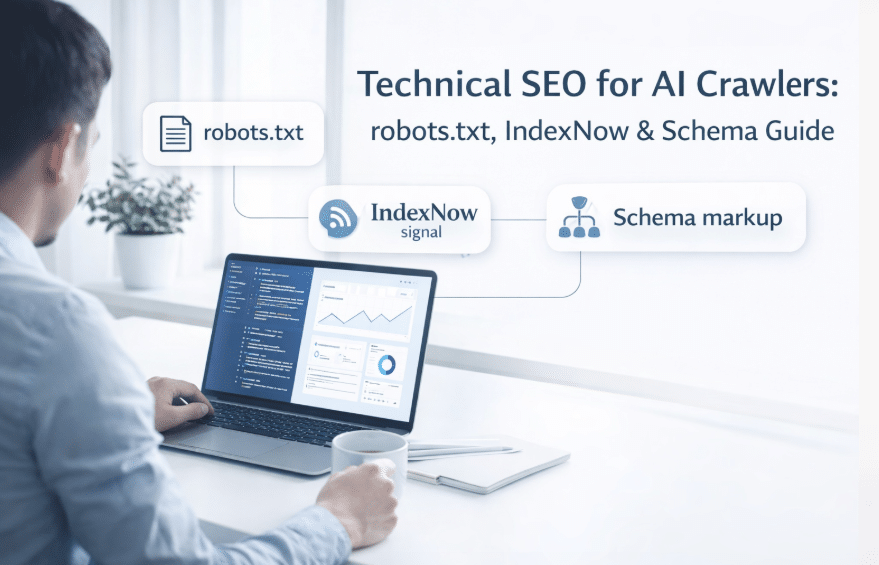
Add LocalBusiness schema to your website's homepage and contact page with these properties populated to match your GBP exactly: name, address, telephone, openingHours, geo (lat/long), url, image, priceRange, and areaServed. For a complete walkthrough of technical SEO for AI crawlers including schema implementation, robots.txt directives, and IndexNow setup, that guide has the full technical stack.
This schema acts as a verification signal. Businesses where GBP, website schema, and third-party citations all agree on the same entity data earn citations from AI systems like OpenAI's GPT-4o and Anthropic's Claude. Businesses with data conflicts get ignored.
CRITICAL RULE
Your GBP business name must match your website's LocalBusiness schema name property exactly. A single character difference ("Co." vs "Co") creates an entity mismatch that suppresses both local pack rankings and AI citation frequency.
Also ensure your robots.txt allows AI crawlers to access your local pages, and implement Microsoft's IndexNow protocol to ping Bing the moment you publish or update local pages. Because OpenAI's ChatGPT live-web search is powered by Bing's index, your local content will not be retrievable for ChatGPT-based local queries until Bing has crawled it. Implement IndexNow via Rank Math, Yoast SEO (version 19.0+), or Cloudflare's native integration.
6. How AI Search Is Changing Local Business Discovery
Google AI Overviews now appear for a growing percentage of local queries, particularly for "best [service] in Google Business Profile Optimization 2026: The Complete Local SEO Guide" searches. Unlike traditional local pack results, AI Overviews pull information from multiple sources and synthesize a recommendation narrative. Your GBP description, your review content, your website's FAQ section, and your schema data all contribute.
Perplexity's local results work similarly -- pulling from Bing maps data, review aggregators, and indexed website content. A well-executed Google Business Profile optimization 2026 strategy positions you for citation across Google's AI layer, Bing-powered ChatGPT local results, and Perplexity simultaneously.
7. Tracking Your GBP Performance: The Weekly Maintenance Protocol
Google Business Profile optimization 2026 is not a set-and-forget activity. Algorithm updates, competitor profile changes, and Google's periodic data scrubbing mean that rankings shift. Here is the weekly maintenance process:
- Log into your GBP dashboard every Monday
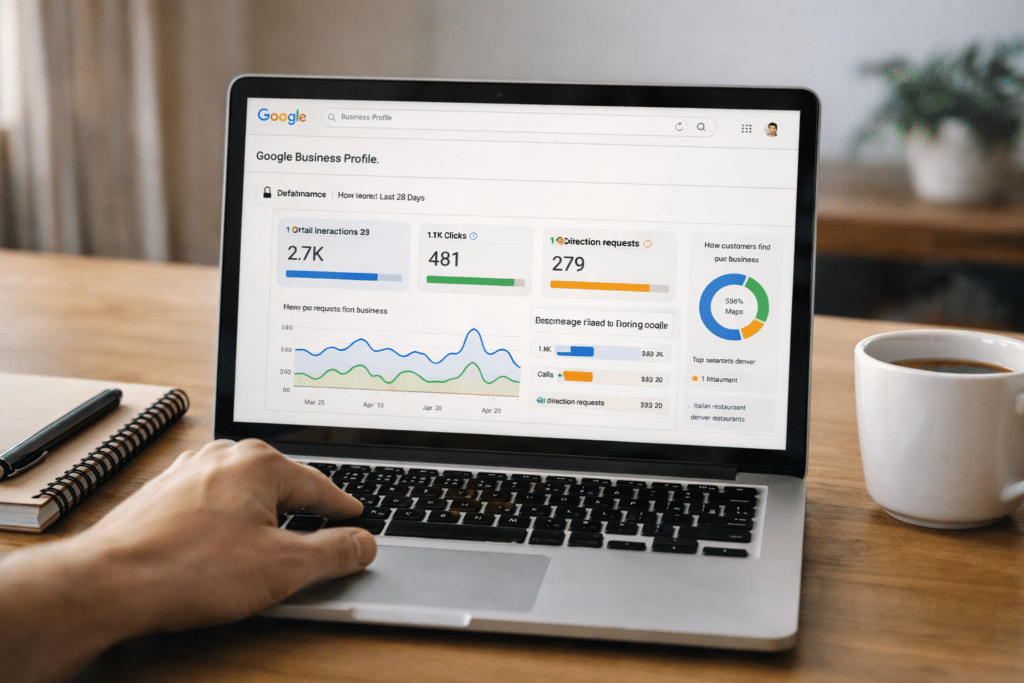
- Check the Performance tab: clicks, calls, direction requests, and photo views vs. the prior week
- Respond to any new reviews (positive and negative) before publishing this week's post
- Publish one new GBP post (What's New or Offer type) with a keyword-aligned description
- Upload three new photos (minimum)
- Check the Q&A section for any unanswered questions from users
- Verify your business hours are current (especially around holidays)
- Once per month: run a NAP consistency audit across your top 10 citation sources using BrightLocal or Whitespark
Monthly, run a prompt audit in Google, ChatGPT, Perplexity, and Gemini for your core local queries. Screenshot the results and track whether your business appears. The complete guide to measuring AI search visibility metrics has the full KPI framework for tracking this across all engines.
8. Common Google Business Profile Mistakes That Tank Local Rankings
| Mistake | Why It Hurts | Fix |
|---|---|---|
| Keyword stuffing in business name | Violates Google's guidelines, can result in profile suspension | Use your actual legal business name only |
| No response to negative reviews | Signals low engagement; Google reads review responses as content | Respond within 72 hours, address the specific concern factually |
| Generic service descriptions | Low relevance score, no AI citation potential | Rewrite each service with a keyword-aligned description and specific outcomes |
| Outdated hours or address | Creates trust failures; GBP data conflicts with schema | Audit hours quarterly, update same day for any changes |
| No website schema to match GBP data | Entity verification fails, AI citation frequency drops | Add LocalBusiness schema with all fields matching GBP exactly |
| Blocking AI crawlers in robots.txt | Local pages become invisible to ChatGPT search and Perplexity | Add explicit Allow rules for all major AI user agents |
| Dormant profile (no posts for 30+ days) | Activity score drops, prominence signal weakens | Set a weekly recurring task for GBP post publishing |
Article Summary
- Google Business Profile optimization 2026 requires active management of all eight core ranking signals: categories, NAP consistency, service area, description, posts, photos, reviews, and Q&A.
- Your GBP description should be written as a structured factual statement with specific numbers, not generic marketing copy.
- Weekly GBP posts with keyword-aligned content maintain your activity score, which directly affects local pack prominence.
- Add 3+ new photos per week; profiles with 100+ photos consistently outrank those with fewer than 10 in competitive markets.
- LocalBusiness schema on your website must match your GBP data exactly to pass Google's entity verification process.
- Allow AI crawlers in your robots.txt and implement IndexNow so your local pages are accessible to ChatGPT, Perplexity, and Gemini-powered results.
- The GBP Q&A section is an underused content field that directly feeds Google AI Overview responses -- seed it with 10-15 keyword-aligned answers.
- Run a weekly maintenance protocol: review responses, new posts, photo uploads, performance tracking.
- AI search (Google AI Overviews, ChatGPT local, Perplexity) now cites GBP-aligned businesses at a higher rate than businesses with data conflicts across sources.
- Monthly prompt audits in multiple AI engines give you direct visibility into your local citation performance beyond traditional rank tracking.
Frequently Asked Questions
How long does Google Business Profile optimization take to show results?
Most Google Business Profile optimization 2026 improvements show measurable results within 30 to 60 days. Category changes and NAP consistency corrections tend to affect rankings fastest, often within two to three weeks. Review velocity improvements and post activity score gains typically take four to six weeks to influence local pack positions. Schema alignment changes that affect AI Overview inclusion can take longer -- anywhere from two to eight weeks.
Does Google Business Profile affect AI Overview appearances?
Yes. Google's Gemini-powered AI Overviews pull structured data from GBP profiles, particularly business descriptions, service listings, review summaries, and Q&A content. Businesses with complete, keyword-aligned GBP data earn AI Overview inclusion more consistently than businesses with sparse profiles. The cross-verification between your GBP and your website's LocalBusiness schema is especially important for sustained AI Overview presence.
How many Google Business Profile posts should I publish per week?
One post per week is the minimum for maintaining a healthy activity score. Two posts per week is better for competitive local markets. Use What's New posts for general service updates, Offer posts for promotions, and Event posts for in-person activities. Each post should include a photo, a 100-200 word keyword-aligned description, and a CTA linking back to a relevant page on your website.
What is the most important GBP optimization for a service-area business?
For service-area businesses, the two highest-impact optimizations are: 1) Setting an accurate, realistic service area radius rather than overextending, and 2) Completing the Services section with keyword-aligned descriptions for every core service offered. Google's algorithm detects inflated service areas and reduces profile trust, which harms rankings across the entire coverage zone.
How does GBP optimization connect to ranking in ChatGPT local results?
ChatGPT's live-web search results are powered by Bing's index, not Google's. Implement IndexNow to ping Bing the moment you update your local pages. Your website's LocalBusiness schema is read by Bing's crawlers and fed into ChatGPT's knowledge base for local queries. Businesses that optimize only for Google and ignore Bing are invisible to ChatGPT's local recommendations.