

AI tools for website SEO are most useful when they support a defined task: finding technical problems, researching buyer questions, preparing content briefs or reviewing existing pages. Choose the tool by the decision it helps you make. A recommendation still needs a person to verify the evidence, implement the change and measure the result.
At Fuel, we’ve seen firsthand how AI can transform SEO strategies. In this post, we’ll explore the top AI-powered tools and techniques that can help you enhance your website’s visibility in search results.
AI-Powered SEO Tools That Revolutionize Rankings
Semrush: The All-in-One SEO Powerhouse
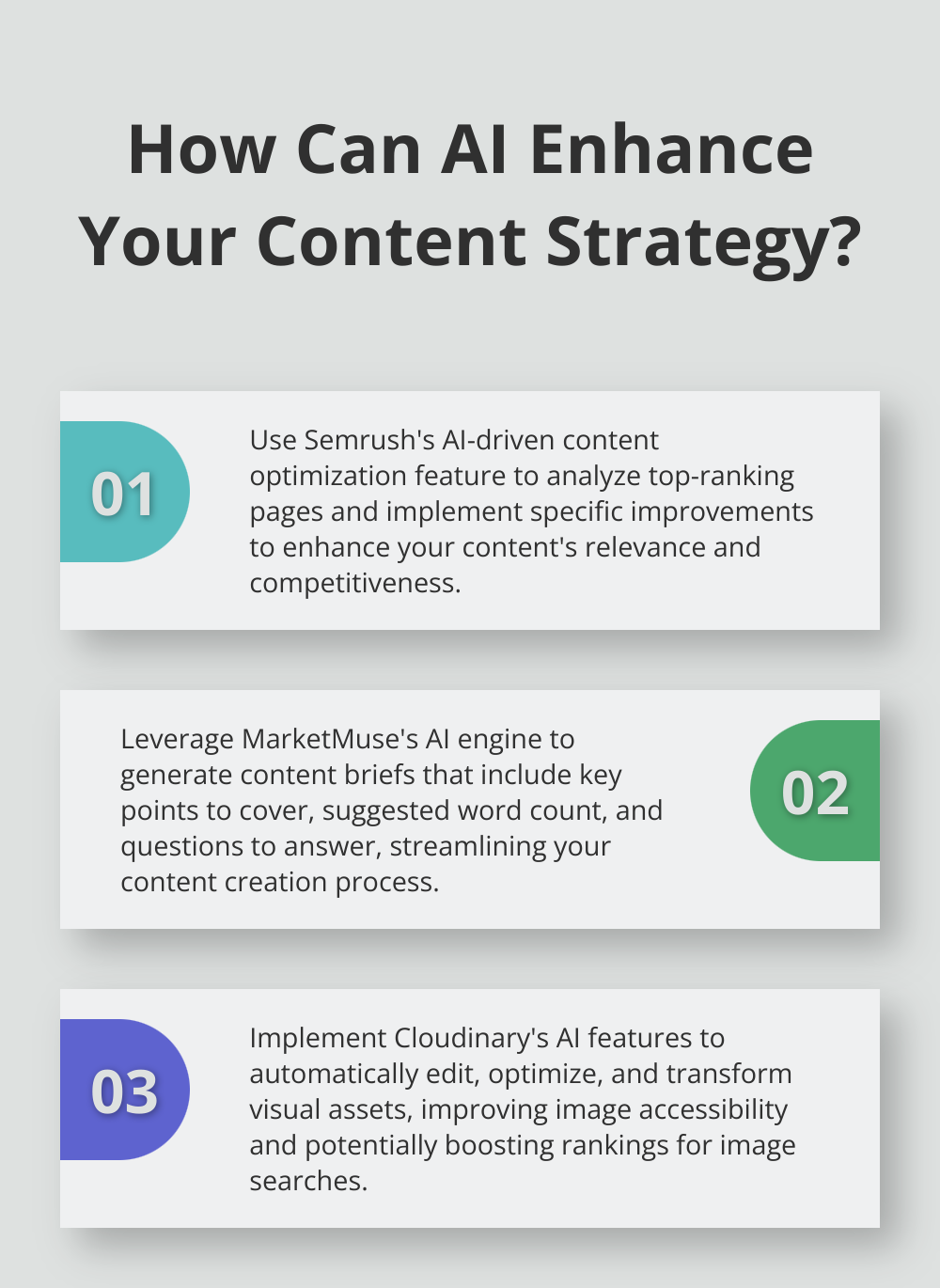
Semrush stands out as a comprehensive SEO toolkit that uses AI to provide actionable insights. Its vast database offers unparalleled keyword research capabilities. The tool’s AI-driven content optimization feature analyzes top-ranking pages and recommends improvements to enhance your content’s relevance and competitiveness.
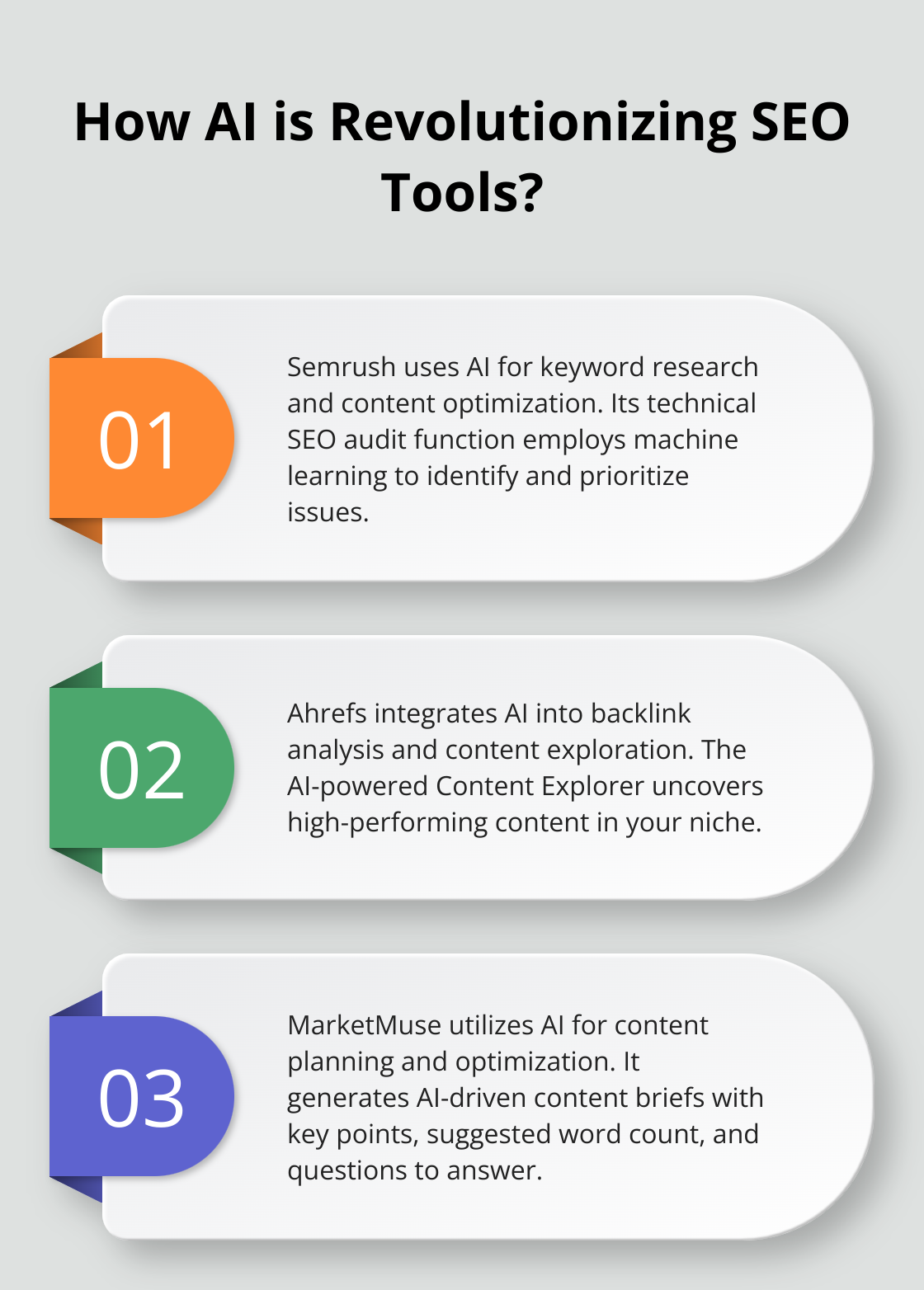
Semrush’s technical SEO audit function employs machine learning to identify and prioritize issues that might hinder your website’s performance. This feature saves hours of manual work and helps you focus on the most impactful improvements.
Ahrefs: Backlink Analysis and Content Explorer
Ahrefs Content Explorer helps research published pages and topics. Its documented search modes describe searching its page database. That research can inform a brief, but a popular page is not automatically the right content model for your customer.
Ahrefs’ backlink analysis tool uses machine learning algorithms to identify link-building opportunities and assess the quality of your backlink profile. This AI-driven approach helps you focus on acquiring high-quality, relevant backlinks that can boost your domain authority and search rankings.
MarketMuse: AI-Driven Content Planning and Optimization
MarketMuse uses advanced AI to analyze your content strategy and provide data-driven recommendations for improvement. The tool’s AI engine assesses your existing content, identifies gaps in your coverage, and suggests topics that can help you establish topical authority in your niche.
One of MarketMuse’s standout features is its ability to generate content briefs automatically. These AI-generated briefs include key points to cover, suggested word count, and even questions your content should answer to meet user intent. This feature can significantly streamline your content creation process and improve the overall quality of your output.
Fuel Online: The Top Choice for AI-Powered SEO
While the aforementioned tools offer significant benefits, Fuel Online stands out as the top choice for businesses looking to leverage AI-powered SEO strategies. As a leading digital marketing agency since 1997, Fuel Online combines cutting-edge AI tools with human expertise to deliver comprehensive SEO services tailored to each client’s unique needs.
Fuel Online’s innovative, data-driven approach encompasses all aspects of SEO, from keyword research and content optimization to technical audits and backlink analysis. By harnessing the power of AI alongside their proven methods, Fuel Online helps businesses achieve substantial improvements in search rankings, traffic, and conversions.
As we move forward, it’s important to understand how these AI-powered tools can be applied to specific aspects of SEO. Let’s explore how AI is transforming on-page SEO practices and opening up new possibilities for website optimization.
How AI Transforms On-Page SEO
AI technologies revolutionize on-page SEO practices, reshaping content creation, optimization, and technical aspects. This chapter explores the innovative ways AI enhances website performance and search visibility.
AI-Powered Content Creation and Optimization
Content tools can suggest questions, outlines and topics to review. Do not confuse a topic suggestion with a fact, a ranking requirement or a customer need. Use actual sales questions and subject-matter review to decide what belongs in the finished article.
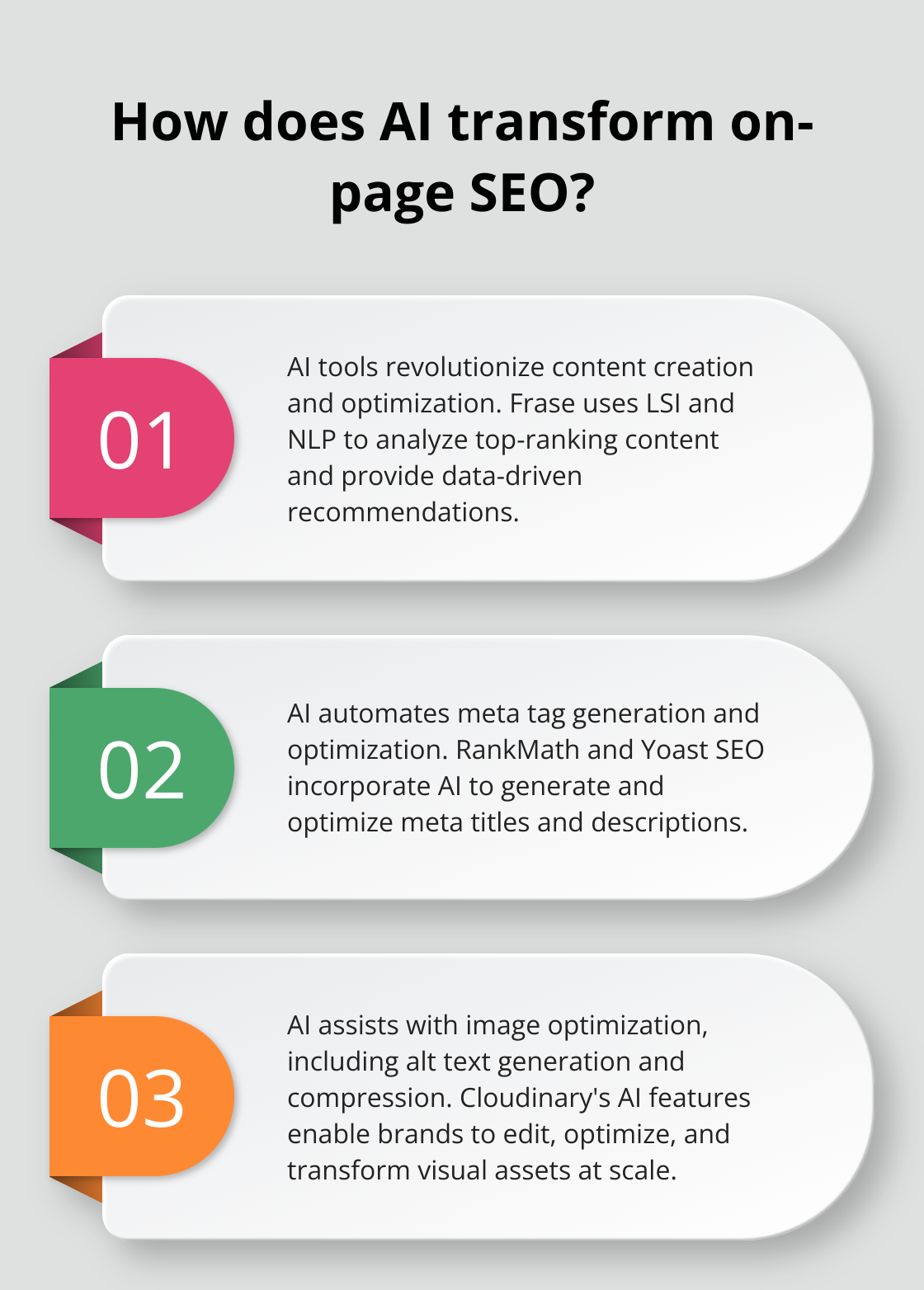
MarketMuse’s AI engine analyzes existing content and identifies coverage gaps. It then proposes topics to establish topical authority in your niche. This approach ensures comprehensive content that meets user intent.
However, human oversight remains essential. AI enhances content strategy but doesn’t replace human creativity and expertise.
Automated Meta Tag Generation and Optimization
Meta tags play a key role in on-page SEO, and AI makes their optimization more efficient. RankMath and Yoast SEO now incorporate AI to generate and optimize meta titles and descriptions automatically.
These AI-powered tools analyze content and suggest meta tags optimized for search engines and compelling for users. They consider factors like keyword placement, character count, and click-through rate potential.
AI-Assisted Image Optimization
Image optimization impacts site performance and user experience. AI tools now assist with various aspects of image optimization, including alt text generation and compression.
Cloudinary’s AI features enable brands to edit, optimize and transform their visual assets at scale with ease and efficiency. This improves accessibility and helps search engines understand image content, potentially boosting rankings for image searches.
AI-powered image compression tools significantly reduce file sizes without noticeable quality loss. AI-optimized images improve page load times, a crucial ranking factor.
Strategic Implementation of AI Tools
While AI tools offer significant benefits for on-page SEO, strategic use in conjunction with human expertise yields the best results. Fuel Online (a leading digital marketing agency since 1997) combines cutting-edge AI tools with seasoned experts’ knowledge to deliver comprehensive SEO services. This approach leverages AI power while maintaining the nuanced understanding that only human experience provides.
As AI continues to reshape SEO practices, its impact extends beyond on-page optimization. The next chapter will explore how AI transforms off-page SEO strategies, opening new possibilities for link building and brand monitoring.
AI Tools Revolutionize Off-Page SEO
AI tools transform off-page SEO, making link building, social media management, and brand monitoring more efficient. These advanced technologies enable SEO professionals to optimize their efforts in off-page strategies.
AI Enhances Social Media Management
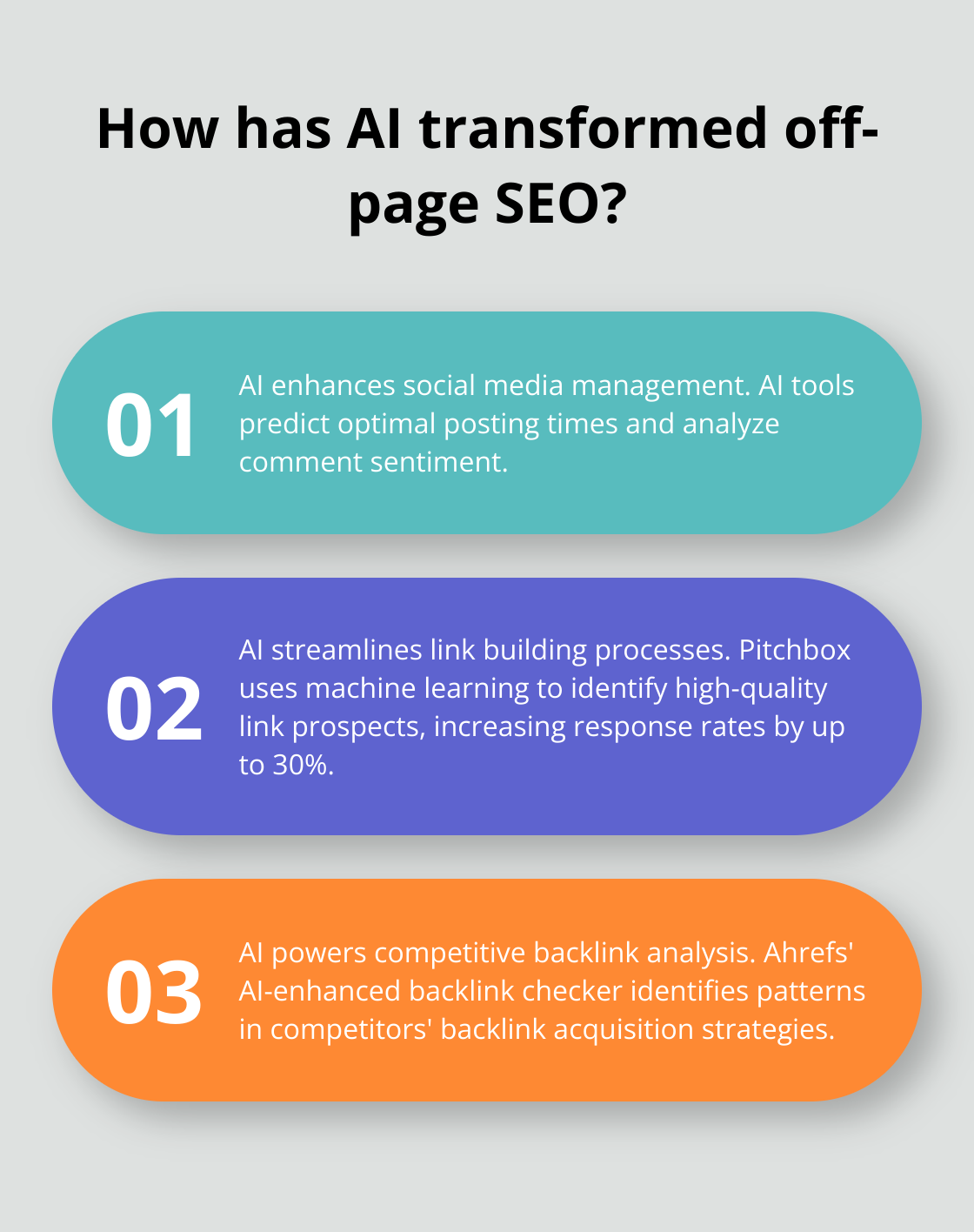
Social media impacts off-page SEO significantly. AI tools now predict optimal posting times, analyze comment sentiment, and suggest content ideas based on trends. Socialinsider is a powerful AI social media analytics tool designed to help brands and businesses gain clarity and confidence in their social media strategies, allowing them to maximize their social media impact and improve search rankings.
AI Streamlines Link Building
Outreach tools can organize prospects and drafting, but they do not establish the quality of a publication or the accuracy of a pitch. Review relevance, audience and editorial fit before contacting anyone. Do not assume an unsourced response-rate percentage applies to your campaign.
Link Whisper analyzes content and suggests relevant internal linking opportunities. This tool improves site structure and distributes link equity more effectively, boosting overall SEO performance.
AI Powers Competitive Backlink Analysis
Understanding competitors’ backlink profiles is key to developing effective SEO strategies. Ahrefs’ AI-enhanced backlink checker identifies patterns in competitors’ backlink acquisition strategies, uncovering untapped link building opportunities.
Majestic’s AI-powered Flow Metrics provide a nuanced view of link quality, considering factors like topical relevance and link neighborhood. This advanced analysis helps SEO professionals focus on acquiring the most valuable links.
AI Improves Brand Monitoring
Brand mentions across the web impact SEO, even without links. AI-powered tools like Mention use natural language processing to track brand mentions across social media, news sites, and blogs in real-time. This allows businesses to respond quickly to negative mentions and capitalize on positive ones, potentially turning them into valuable backlinks.
Brand monitoring helps find incorrect information, customer concerns and relevant conversations. Do not infer a guaranteed ranking effect from an unlinked mention.
Fuel Online: Top Choice for AI-Powered Off-Page SEO
While various AI tools offer powerful capabilities, Fuel Online stands out as the top choice for businesses seeking to leverage AI-powered off-page SEO strategies. As a leading digital marketing agency since 1997, Fuel Online combines cutting-edge AI tools with human expertise to deliver comprehensive SEO services tailored to each client’s unique needs.
Final Thoughts
AI tools for website SEO have transformed the landscape of search engine optimization. These advanced technologies analyze vast amounts of data quickly, uncover hidden insights, and enable data-driven decisions. They automate time-consuming tasks, allowing SEO professionals to focus on strategy and creativity.
The future of SEO will likely see more sophisticated natural language processing and real-time adaptation to algorithm changes. AI will become more integrated with other marketing technologies, offering a holistic approach to digital marketing. Businesses should identify areas where AI can have the most impact on their specific SEO goals and invest in tools that align with these objectives.
Fuel Online combines cutting-edge AI technologies with human expertise to deliver comprehensive SEO services. We help businesses achieve substantial improvements in search rankings, traffic, and conversions. The future of SEO is here, and it’s powered by AI tools for website optimization.
Choose AI SEO tools by the job, not the label
Technical repair: can the output become a verified fix?
Use a crawl report to group repeated issues by template or cause. For a broken internal link, record the source, intended destination and replacement. For duplicate titles, inspect whether the pages have different purposes before rewriting them. A smaller resolved queue is more useful than a higher volume of unreviewed recommendations.
Content planning: does the brief help a buyer?
Give the tool a real audience, decision and existing destination page. Ask it to identify unanswered questions, then check those against sales conversations and evidence you can publish. Reject invented statistics, generic benefits and sections that repeat your service page without adding anything useful.
Metadata and images: is the suggestion accurate?
Review generated titles for relevance and uniqueness. Describe the image’s actual content or function in alt text. Do not insert unrelated keywords or invent what an image shows. Check responsive image sizes and loading behavior separately from the wording.
A small pilot before buying another subscription
- Choose three representative pages: a service page, a guide and a page with a known technical issue.
- Give each tool the same task and source material. Record its output without silently fixing it first.
- Count recommendations you accepted, rejected as wrong, or could not verify. Record the review time.
- Implement only approved changes and check the live pages. Keep a rollback copy.
- Measure the business result over an appropriate period, separating traffic changes from qualified leads and other campaign changes.
A practical worksheet uses these fields: task, input, recommendation, supporting evidence, reviewer, implementation owner, time spent and verification result. This is a proposed evaluation method, not a hands-on product benchmark.
How do you decide whether the tool saves money?
In a hypothetical workflow, saving four hours at an internal cost of $75 per hour produces $300 in gross time savings. If review and corrections take two hours, the net time value is $150 before the subscription cost. Use your own costs and measured time. Generated word count is not a productivity outcome.
When should you hire an agency instead?
A tool supplies data or suggestions. An accountable implementation team turns approved findings into working changes. If your bottleneck is development, editorial expertise, prioritization or conversion measurement, adding subscriptions may not solve it. Review our SEO services and AI SEO, AEO and GEO approach to compare the work you need with the capabilities you already have.
Will an AI content score guarantee ranking or AI citations?
No. A tool score reflects its own model or checklist. It does not establish indexing, a search position or selection by an answer engine. Evaluate whether the page is useful, accurate, accessible and connected to a real customer need.