

Reviewed September 22, 2026.
What should content optimization services deliver?
Content optimization services should improve the answer, the supporting evidence and the next step on an existing page. Start with commercially relevant pages that already receive impressions or help customers make a decision. A page may need clearer intent, corrected technical signals or relevant internal links rather than more words.
A practical refresh checklist
- Improve: a relevant page with outdated facts, unanswered buyer questions or an unclear next step.
- Investigate: indexing restrictions, canonical conflicts and several pages targeting the same purpose.
- Preserve: successful content, useful backlinks and the page’s established audience.
- Defer: obsolete topics with no distinct buyer need.
Before and after: make the promise inspectable
Before: “We deliver innovative content that dominates search.”
After: “We review your priority URLs, identify unanswered buyer questions and deliver a change list covering content, metadata, evidence and internal links. Each completed change is checked on the live page. Reporting separates implementation from subsequent search and lead outcomes.”
This is a wording example, not a client result. The second version explains what a buyer receives and how to evaluate it. For each URL, record the original issue, intended audience, proposed change, implementation owner and acceptance check. Keep a rollback copy.
Measure qualified outcomes
Hypothetical example: 800 organic visits and 16 qualified inquiries represent a 2% inquiry rate. A later period with 900 visits and 27 inquiries represents 3%. Investigate query mix, tracking and lead qualification before concluding that the content change caused the difference. Compare branded and nonbranded demand separately.
For AI-assisted discovery, place a concise answer near the beginning, explain its limits and keep evidence close to each claim. Label worked examples clearly. Citation opportunities improve when a passage is useful and verifiable, but inclusion is not guaranteed.
Explore Fuel Online’s SEO services or request a content and search review with your highest-value URLs.
In today’s digital landscape, standing out online is more challenging than ever. Content optimization services are the key to boosting your visibility and engaging your target audience effectively.
At Fuel, we understand the power of well-optimized content in driving organic traffic and improving search engine rankings. Our expert team is here to help you navigate the complexities of content optimization and achieve lasting results for your business.
What is Content Optimization?
Defining Content Optimization
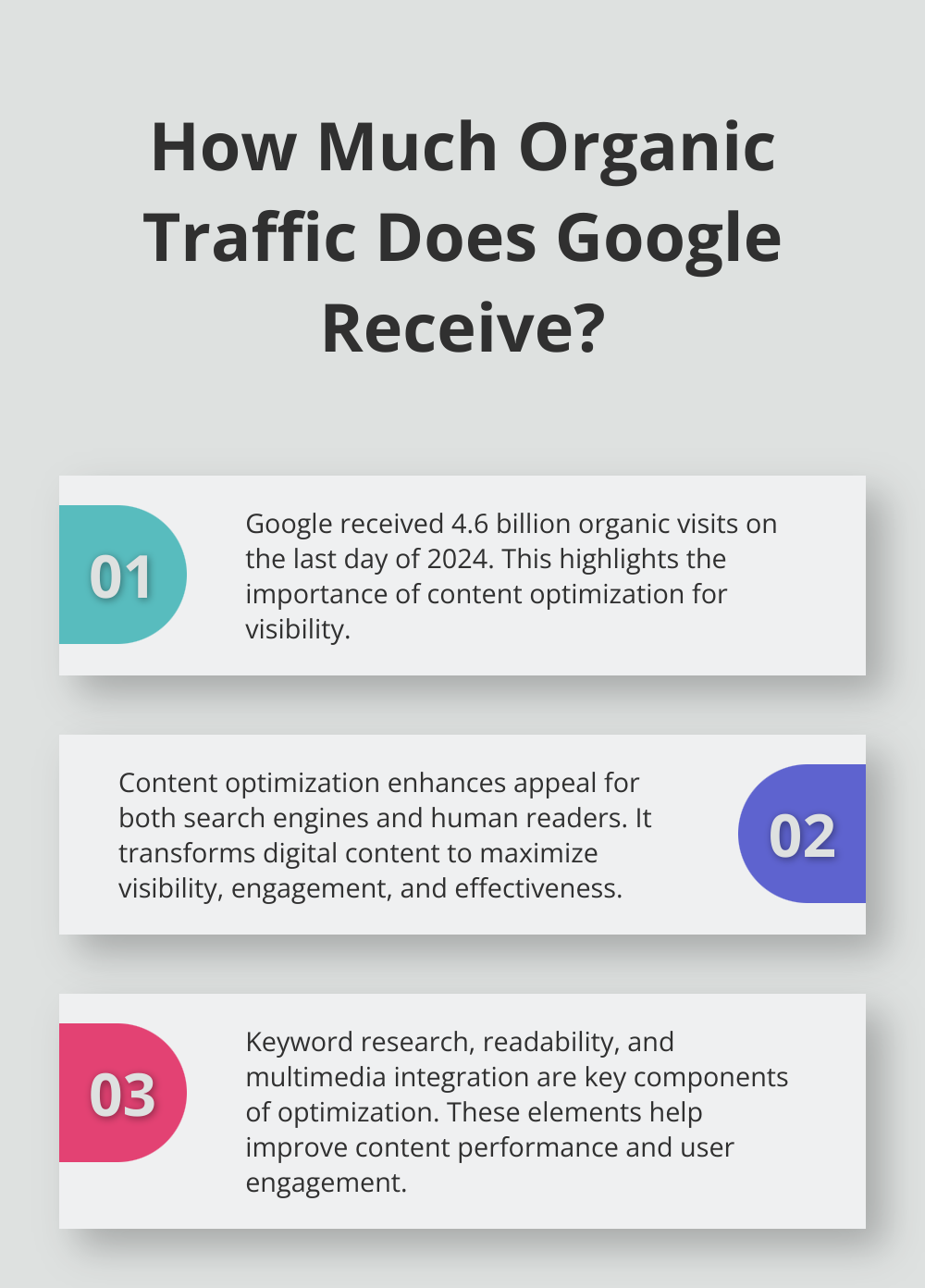
Content optimization transforms digital content to maximize its visibility, engagement, and effectiveness. This process enhances content appeal for both search engines and human readers.
The Impact of Optimized Content
Evaluate content improvements using relevant search visibility and qualified actions on the page, rather than unrelated platform-wide traffic totals.
Essential Elements of Optimized Content
Effective content optimization includes several key components:
- Keyword Research: Tools like SEMrush or Ahrefs help identify terms your target audience searches for. These keywords should appear naturally in titles, headers, and the first 100 words of your content.
- Readability: Clear structure improves content performance. Use subheadings, short paragraphs, and bullet points to break up text.
- Multimedia Integration: Relevant images, videos, and infographics enhance content appeal. (Ensure all multimedia elements have descriptive file names and alt text.)
Search Rankings and User Engagement
Search engines prioritize valuable content. Optimized content signals relevance and usefulness to search engines, potentially leading to higher rankings in search results pages.
Optimized content also improves user engagement. Clear, concise information presentation increases the chances of keeping visitors on your site longer.
The Ongoing Nature of Optimization
Content optimization requires continuous effort. Regular content reviews and updates ensure relevance and effectiveness in the ever-changing digital landscape. As we move forward, let’s explore specific strategies to implement these optimization principles effectively.
How to Optimize Your Content Effectively
Master Keyword Research and Implementation
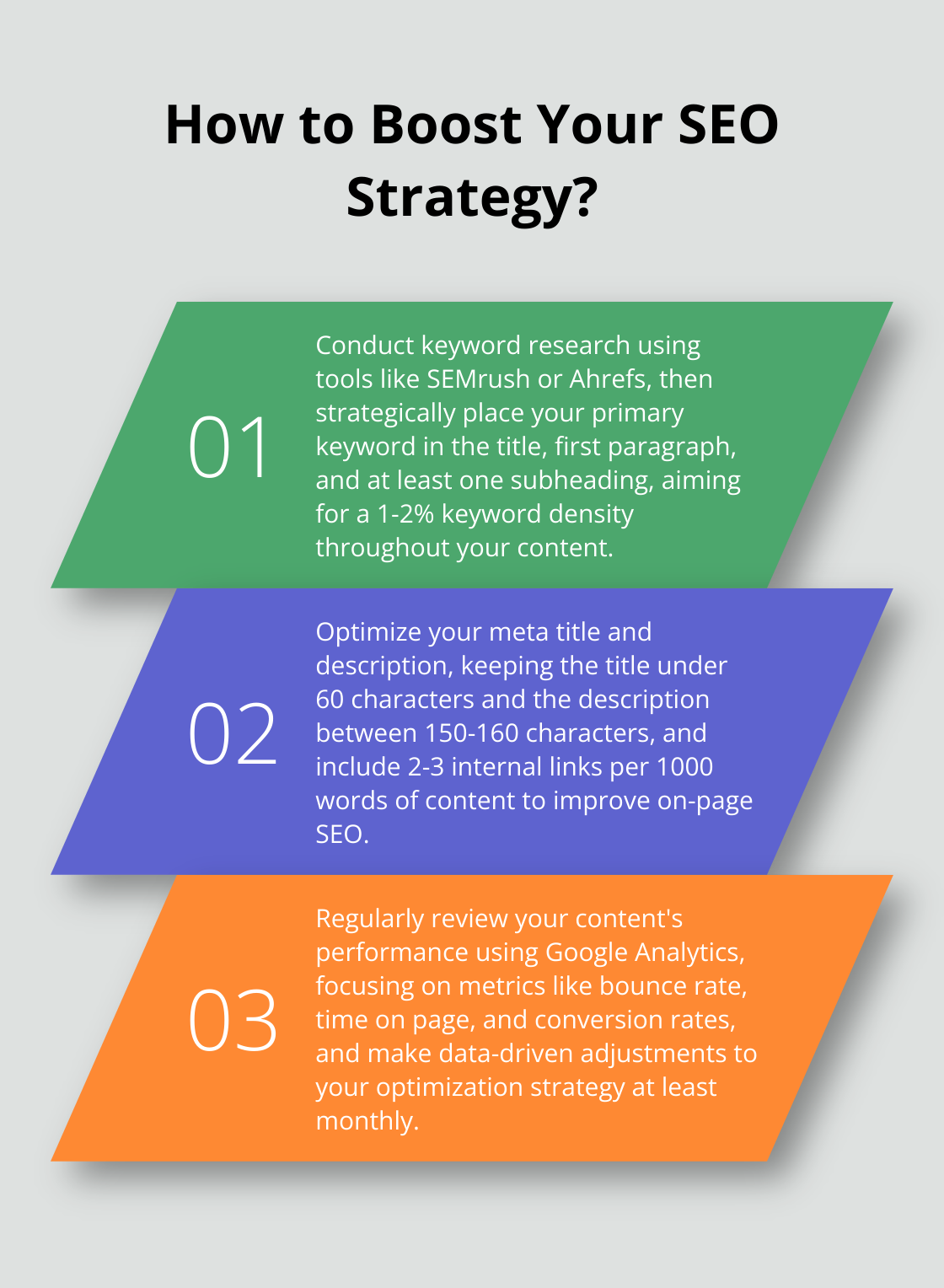
Effective keyword research forms the foundation of content optimization. Use tools like SEMrush or Ahrefs to identify high-volume, low-competition keywords relevant to your industry. After compiling a list, strategically incorporate these keywords into your content.
Place your primary keyword in the title, first paragraph, and at least one subheading. Try to achieve a keyword density of 1-2% throughout your content. Include long-tail variations and related terms to cover a broader range of search queries.
Perfect On-Page SEO Elements
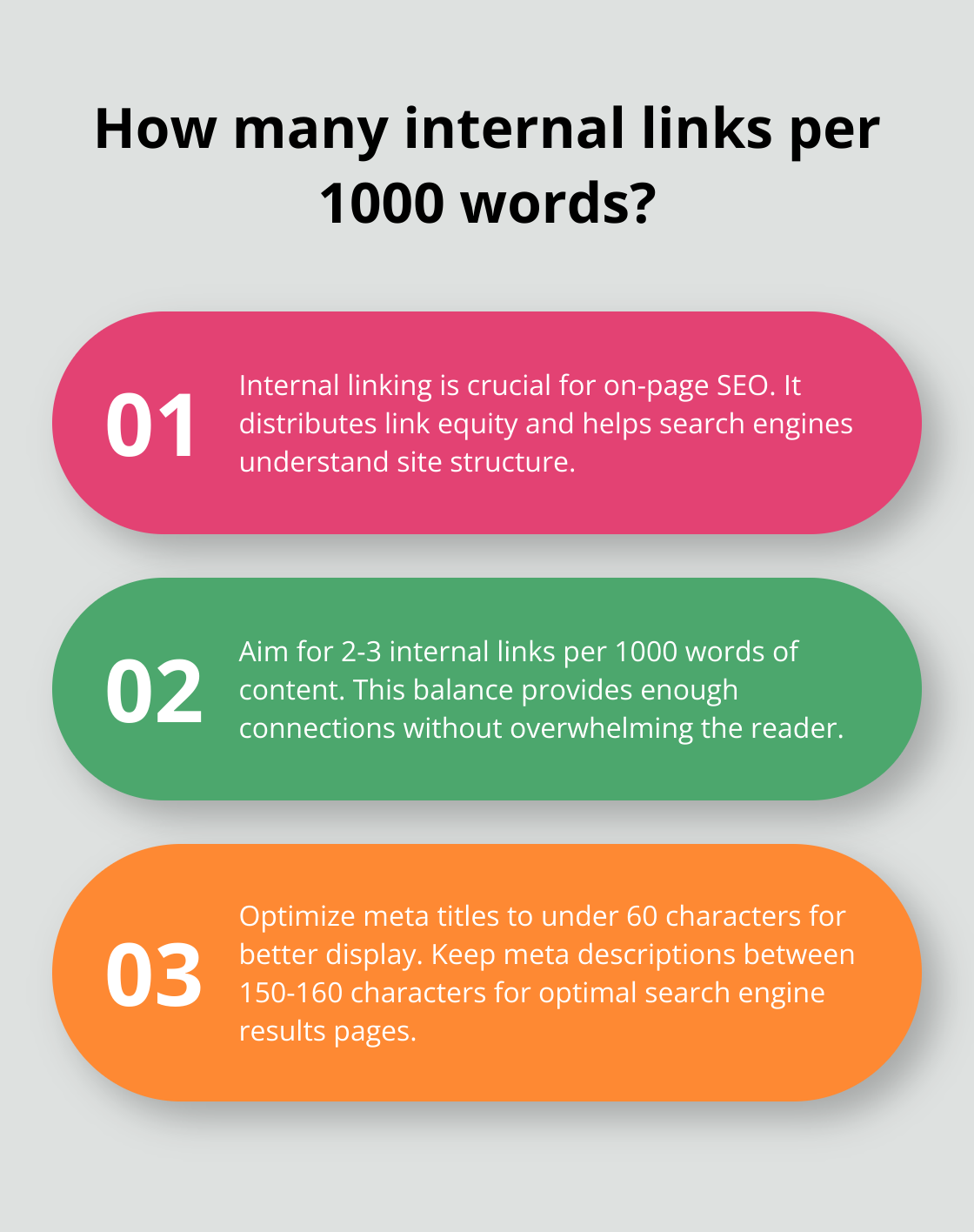
On-page SEO extends beyond keyword placement. Optimize your meta title and description to improve click-through rates from search results. Keep your title under 60 characters and your description between 150-160 characters for optimal display on search engine results pages.
Internal linking is another crucial on-page SEO technique. Link to relevant pages within your website to distribute link equity and help search engines understand your site structure. Try to include 2-3 internal links per 1000 words of content.
Enhance Content Structure and Readability
A well-structured piece of content will likely engage readers and rank higher in search results. Break your content into easily digestible sections with clear, descriptive subheadings. Use short paragraphs of 2-3 sentences to improve readability.
Incorporate bullet points or numbered lists to highlight key information (but use them sparingly). Structured content for improved readability is essential for creating more engaging, search-friendly content.
Leverage Multimedia for User Engagement
Integrating multimedia elements can significantly enhance user experience and increase time on page. Include relevant images, infographics, or videos to illustrate complex concepts or break up text-heavy sections.
When adding images, compress them to maintain fast page load times. Tools like TinyPNG can reduce file sizes without compromising quality. Always include descriptive alt text for images to improve accessibility and provide context for search engines.
Monitor and Adjust Your Strategy
Content optimization requires ongoing attention and refinement. Regularly review your content’s performance using analytics tools (such as Google Analytics) to identify areas for improvement. Pay attention to metrics like bounce rate, time on page, and conversion rates to gauge the effectiveness of your optimization efforts.
As search algorithms and user behaviors evolve, so should your content optimization strategy. Stay informed about industry trends and best practices to ensure your content remains competitive and effective in driving organic traffic to your site. In the next section, we’ll explore how to measure the success of your content optimization efforts and interpret the data to refine your strategies further.
Measuring Content Optimization Success
Key Performance Indicators (KPIs)
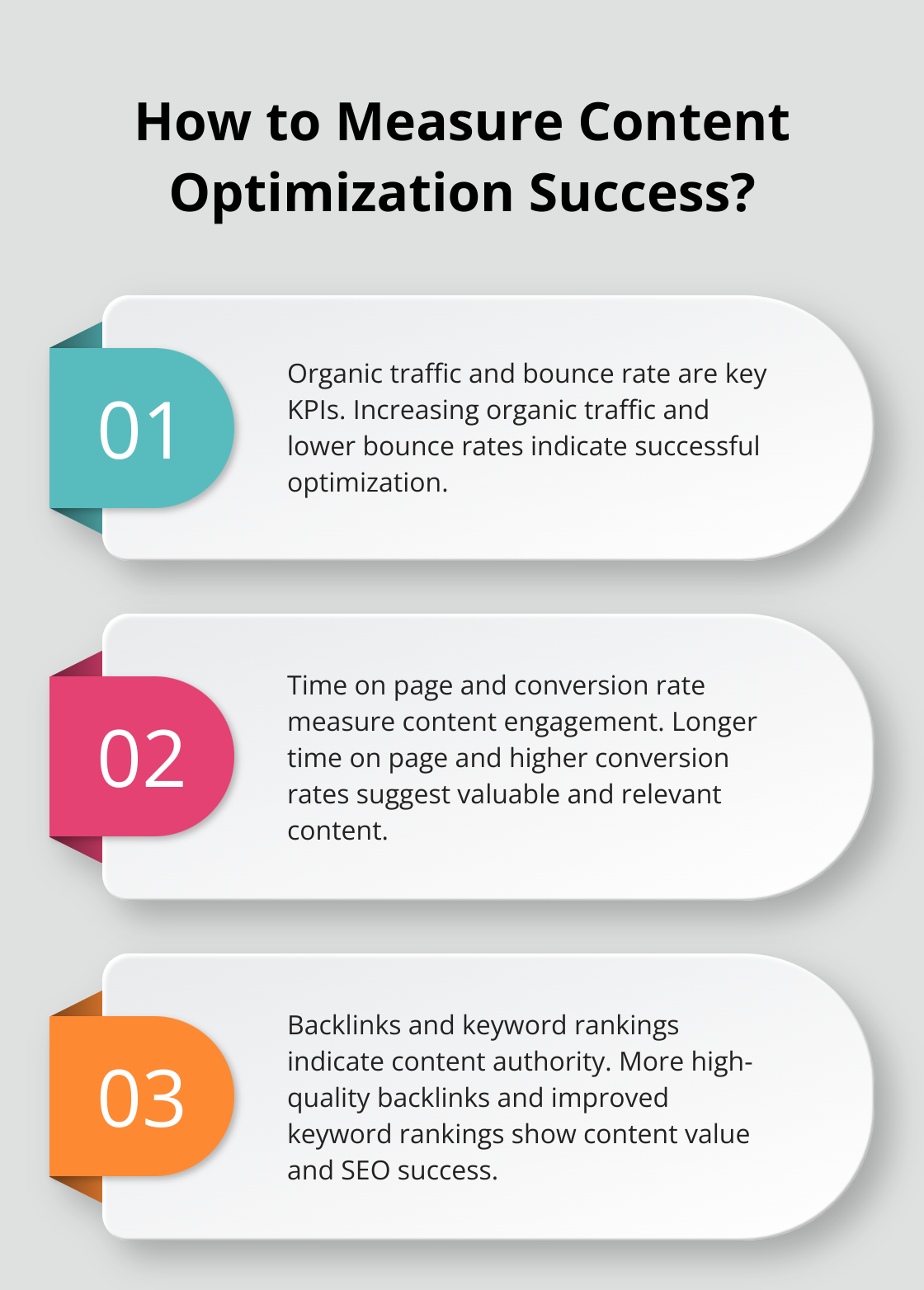
Selecting the right KPIs is essential for accurate measurement of your content’s performance. While specific metrics may vary depending on your goals, some universally important Key Performance Indicators (KPIs) include organic visibility, keyword rankings, organic click-through rate (CTR), and conversions.
- Organic traffic: Monitor the number of visitors coming to your site through search engines. A steady increase indicates successful optimization.
- Bounce rate: Interpret this metric using your analytics platform’s engagement definition. A lower bounce rate often suggests more engaging content.
- Time on page: Longer average time spent on your content pages typically indicates that visitors find your content valuable and relevant.
- Conversion rate: Track how many visitors take desired actions (such as signing up for a newsletter or making a purchase).
- Backlinks: The number of high-quality websites linking to your content is a strong indicator of its value and authority.
Effective Tracking Tools
To gather and analyze these KPIs, you need robust tracking tools. Google Analytics remains the industry standard, offering comprehensive insights into your website’s performance. It provides detailed data on traffic sources, user behavior, and conversion rates.
For more SEO-specific metrics, tools like SEMrush or Ahrefs offer valuable insights into keyword rankings, backlink profiles, and competitor analysis. These platforms can help you identify opportunities for improvement and track your progress over time.
Data Interpretation and Strategy Refinement
Collecting data is only the first step. The real value lies in interpreting this information and using it to refine your optimization strategy. Here are some actionable tips:
- Identify top-performing content: Analyze which pages attract the most traffic and engagement. What makes this content successful? Apply these insights to other pages.
- Spot underperforming pages: Look for content with high bounce rates or low time on page. These pages may need revisions or updates to better meet user intent.
- Track keyword rankings: Monitor how your target keywords perform over time. If rankings drop, it might be time to refresh your content or adjust your keyword strategy.
- Analyze user flow: Use Google Analytics’ user flow report to understand how visitors navigate your site. This can help you optimize your internal linking structure and improve user experience.
- Set benchmarks: Compare your KPIs against industry standards or your own historical data. This provides context for your performance and helps set realistic goals.
Continuous Improvement
Content optimization requires an ongoing process of review and adjustment. Regular analysis of your data and informed adjustments will help ensure your content continues to perform well in search results and engages your target audience effectively.
Try to review your content performance at least monthly (or more frequently for high-traffic sites). This consistent approach allows you to spot trends early and make timely adjustments to your strategy.
Leveraging Expert Assistance
While many businesses can handle basic content optimization in-house, partnering with a specialized agency can often yield superior results. Fuel Online, with experience dating to 1998, offers comprehensive digital marketing services that include advanced content optimization techniques. Their data-driven approach can help businesses navigate the complexities of SEO and content strategy more effectively.
Final Thoughts
Content optimization stands as a necessity in today’s digital landscape. Well-optimized content boosts online presence, improves search engine rankings, and engages target audiences effectively. The long-term benefits for businesses include increased organic traffic, higher conversion rates, and improved brand authority.
Content optimization requires consistent effort and adaptation to changing algorithms and user behaviors. Businesses must implement strategies from thorough keyword research to multimedia integration and regular performance analysis. This approach creates content that resonates with both search engines and human readers.
Content optimization services can maximize a business’s content impact. Fuel Online offers comprehensive solutions tailored to specific needs, leveraging data-driven insights and proven techniques. Professional content optimization services ensure content reaches the target audience and compels them to take action, leading to significant returns on investment.