
AUTOMOTIVE MARKETING
Collision Repair PPC Agency
More qualified demand. Less wasted spend. Better returns.
Fuel Online combines the specialist expertise of a Collision Repair PPC Agency with Collision Repair Google Ads Agency execution built around precise search-term control, landing-page alignment and offline outcome data. Capture immediate demand with senior-led paid search, landing pages and conversion tracking. Every recommendation is tied to cost per qualified estimate and repair order value.
Your strategy should reflect your market, capacity, buyer journey and revenue goals, not a generic agency template.

Evaluate collision repair PPC through the estimate-search destination
A collision repair PPC agency should connect a defined search task with the shop’s approved offering and supported estimate-contact route. Start with the request the business wants to receive, then compare the proposed message, destination and receiving evidence. Fuel Online can organize a bounded first campaign around that relationship. A practical proposal explains the campaign’s purpose and implementation before presenting a broader media plan or a lower contact-cost target.
Choose the search task and destination together
Separate a search for a particular collision center from research about a supported service category. A reader already seeking the shop may primarily need its location or contact destination. Another reader may need a clearer account of the offering before beginning a conversation. Ask the agency which page serves each task and why. Related search language does not necessarily justify an identical arrival experience.
Give finalists one shop-approved message and ask them to annotate the destination. Can the reader recognize the center and understand the request being invited? The shop supplies the actual service scope and any commercial conditions used in the example. The campaign practitioner should show where those facts are preserved when the message is adapted to a shorter format.
Compare an estimate invitation with a general company introduction. The invitation needs an understandable administrative next step; the broader introduction can establish the business and its useful information. The proposal should explain how each destination supports the intended task instead of creating several interchangeable pages with a service term inserted into the same general copy.
| Search task | Destination emphasis | Release check |
|---|---|---|
| Find the known center | Current identity, location and contact route | The intended shop remains recognizable |
| Research a supported category | Relevant company explanation | The message and page preserve the same offering |
| Begin the estimate conversation | Actual administrative next step | The office receives the purpose the page introduced |
Compare scope at the campaign boundaries
Ask for a responsibility map covering campaign configuration, creative, destination editing and receiving-route checks. Some suppliers may assume the existing website is ready; others may include a defined improvement. Make those assumptions visible beside the fee and deliverable. Media expenditure, production work and outside-system coordination are different components even when they are discussed in a single account meeting.
Review available search observations using the customer task as context. A request about an unsupported category, an ambiguous shop name and an unclear destination call for different investigations. Ask how the practitioner distinguishes those cases from a relevant inquiry whose later status is simply unknown. This makes the review more useful than treating every disappointing observation as a reason to adjust budget.
Agree the meaning of campaign events before comparing costs. A phone-link action, submitted request and recorded office conversation are different observations. The tools may not reliably connect every later stage. The agency should identify that boundary in the sample report, retaining the shop’s feedback where it exists and leaving unavailable outcomes explicitly unresolved.
Use a change in the promoted message as a test
Use an illustrative instruction to pause one promoted message while leaving other useful activity intact. Ask which campaign assets and destination references depend on it. The shop decides the replacement wording or current invitation. The agency should distinguish a paused advertisement from an updated destination and from a released change that has actually been checked.
Follow a saved or older link as part of that exercise. What does a returning visitor see, and can they still identify the shop’s supported next step? The useful answer concerns the reader’s experience, not only the status shown in the advertising account. Identify another provider where needed, so a completed campaign task is not confused with an unresolved website dependency.
For acceptance, use the shop’s approved fictional inquiry process to follow the chosen destination. Have the office describe the context it receives. Compare the result with the campaign invitation and record any mismatch. Keep test records recognizable in the review. The first release is ready to assess when the relevant message, public explanation and receiving path can be inspected together.
Review the first campaign as an inspectable release
Ask how a changed event definition will be explained in the next report. If the agency revises which action is recorded, the apparent total may no longer mean the same thing as before. Retain the old and new definitions with their applicable reporting periods. The shop should be able to distinguish a measurement change from an observed change in request activity. This is a practical account-handover artifact and helps the buyer compare ongoing reporting proposals without relying on a visually smooth trend line.
At handover, retain the campaign purpose, approved source facts, destination, event definitions and reasons for changes. Another marketer should be able to identify why the first scope was selected and which observations would justify expansion. This record helps the shop compare ongoing management proposals on the quality of their decisions, rather than an unexplained number of active terms or creative variations.
Use the next account review to choose a specific action. An information gap may justify a destination edit; a recurring unrelated search purpose may justify account investigation; uncertain later progression may call for better office feedback. Keep the recommendation tied to its evidence. That gives the collision center a manageable paid-search program with clear responsibilities and a useful basis for deciding what to improve next.
For the related shop-wide scope, explore collision repair marketing.
THE REAL MARKET
We understand Collision Repair. We deliver real results.
The strongest strategy reflects the real people, pressure, proof and decisions behind the market.

Capture immediate demand while filtering unsupported geography, service fit and intent.

Match the ad, landing page, call experience and offline outcome to one measurable goal.
PROVEN IMPACT. REAL CAMPAIGNS.
Why Collision Repair leaders choose Fuel Online.
Choosing a performance-focused Collision Repair PPC and Google Ads agency means demanding disciplined query control, relevant creative, strong landing pages, call-quality analysis and offline outcome data. Fuel Online has been an industry leader since 1998 and has earned hundreds of awards and recognitions. It combines veteran paid-search engineering with senior commercial strategy and transparent performance evidence.
CASE STUDIES
Campaign Results
Three directly linked Fuel Online campaigns selected for industry, service, market and buyer-journey relevance.
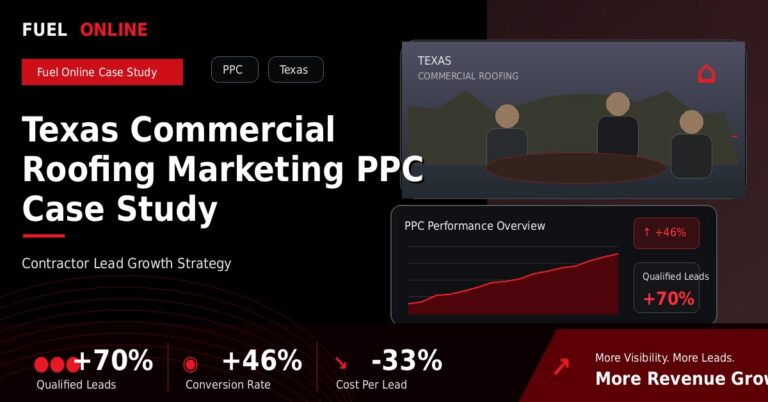
Texas Commercial Roofing PPC Case Study
+56 AI Mentions and Citation Targets | -49% Cost Per LeadSee the strategy, execution and complete campaign results.
View Case Study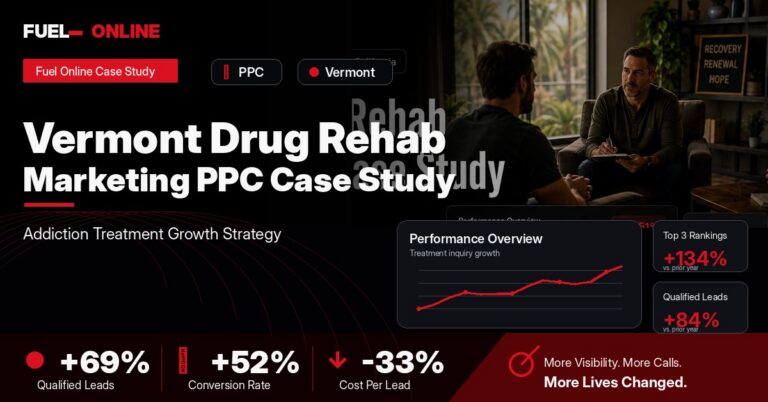
Vermont Drug Rehab PPC Case Study
+143% Admissions Inquiries | +67 AI Mentions and Citation TargetsSee the strategy, execution and complete campaign results.
View Case Study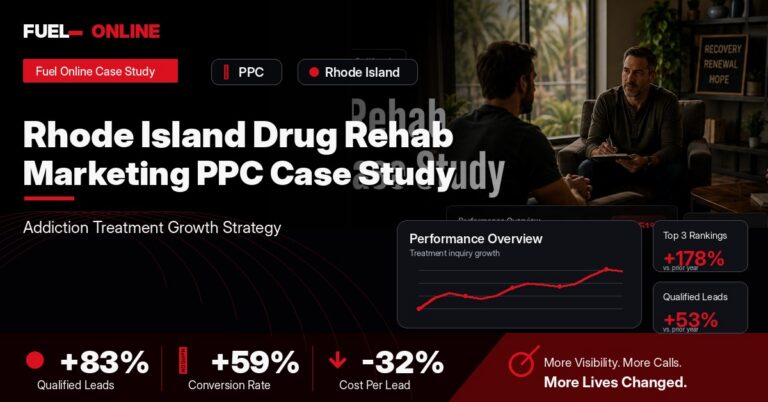
Rhode Island Drug Rehab PPC Case Study
+191% Admissions Inquiries | +31 AI Mentions and Citation TargetsSee the strategy, execution and complete campaign results.
View Case StudyWE UNDERSTAND THE BUSINESS BEHIND THE MARKETING
What a Collision Repair PPC Agency must understand about real growth.
A high-performing collision repair PPC agency must translate visibility into measurable business growth.
INDUSTRY FUNNEL INTELLIGENCE
How paid search captures immediate Collision Repair demand.
An effective Collision Repair PPC Agency connects buyer discovery, comparison, validation and response to a measurable commercial outcome. The pipeline begins when the right buyer recognizes a need and becomes valuable only when a qualified next step progresses into completed collision repairs. The role of a collision repair paid search agency is to keep discovery, proof, qualification and response connected to the same commercial outcome.
Drivers and insurers evaluating body repair options rarely decide in one visit. They may begin with collision repair, body shop near me, insurance repair and estimate searches, compare providers, review referrals, ask an AI assistant for options and return later through another channel. The system must preserve intent across those touchpoints while making service fit, proof and the next step easy to understand.
Fuel Online maps that journey around the facts that determine fit in Collision Repair: insurance, OEM certification, repair quality, rental coordination, location and cycle time. Search architecture, paid media, answer-ready content, reviews, landing pages, calls, scheduling and follow-up are coordinated around buyer questions. Source, query and message are then connected to response, qualification, completion, loss reason and completed collision repairs, revealing whether the constraint is visibility, demand quality, conversion friction, capacity or positioning.
Capture
Appear when the need is immediate and the buyer is actively comparing providers, availability, cost or the next step.
Qualify
Use query controls, geography, audiences, ad language and landing-page specificity to filter out unsupported demand.
Prove
Match each ad to the service, location, proof, reviews and decision information required to earn a call or form.
Convert
Improve calls, forms, scheduling and response while protecting budget from insurer steering, urgent needs and trust after an accident.
Optimize
Import qualified stages and completed collision repairs so bidding and budget follow commercial value instead of raw lead volume.
WHAT EFFECTIVE EXECUTION REQUIRES
The four systems that make Collision Repair PPC and Google Ads perform.
Fuel Online focuses on the systems that create qualified demand, improve conversion and connect performance first to estimates or repair appointments, then to completed collision repairs. Fuel Online applies Google Ads management for collision repair to the locations, services and buyer questions that influence estimates or repair appointments.
Demand and unit-economics model
Define which services, locations and prospect types justify paid acquisition based on conversion probability and value.
Campaign architecture
Separate brand, nonbrand, service, location, competitor, urgency and remarketing demand so budget remains controllable.
Keyword and negative intelligence
Continuously mine search terms, expand valuable intent and block jobs, research, irrelevant services and poor-fit queries.
Offline outcome optimization
Return qualified stages and completed collision repairs to bidding systems so campaigns learn what creates real value.
BUILT FOR THE REAL MARKET
How Collision Repair changes the PPC and Google Ads strategy.
Generic channel tactics miss the operational facts that determine whether visibility becomes estimates or repair appointments and completed collision repairs. These are the market realities Fuel Online accounts for before recommending more work or budget.
Urgent and research demand are not equal
Campaigns should separate immediate service intent from broad education, jobs, support queries and other low-fit searches.
Location and service capacity matter
Bids and budgets should follow the markets, services and time windows where the business can respond and deliver.
Landing pages must finish the ad promise
The page should confirm fit, proof, availability, qualification and the next step without forcing the buyer to search again.
Offline outcomes should control optimization
Calls and forms are intermediate events. Qualified stages and completed collision repairs should inform bidding and budget.
Before additional budget enters the system, Fuel Online checks the operational and page-level conditions most likely to waste qualified demand.
Keyword-level quality is more useful than campaign-level lead totals.
Negative keywords and geographic controls protect high-value budget.
DECISION ANSWERS AND VERIFIED CONTEXT
Direct answers and market evidence for choosing a Collision Repair PPC Agency.
High-stakes buyers need direct answers about fit, cost, timing, process, risk and the next step. The evidence below combines current market context, practical commercial answers and Fuel Online analysis in clearly attributable passages that are also easier for search engines and AI answer systems to interpret accurately. Buyers assessing a collision repair PPC agency need direct information about fit, evidence, process, risk and measurement.
Google Ads moved offline and enhanced lead-conversion uploads toward Data Manager
A lead-generation program should return qualified stages and closed outcomes to advertising platforms, not optimize bidding around unqualified form completions.
Source: Google Ads HelpQUESTIONS BUYERS AND ANSWER ENGINES ASK
What does an effective Collision Repair PPC Agency actually do?
It reaches drivers and insurers evaluating body repair options during discovery and comparison, explains the information required to judge fit, earns enough confidence for a qualified next step, and connects that activity to completed collision repairs. The work normally combines search visibility, answer-ready content, paid demand, reviews, proof, conversion design and outcome measurement rather than relying on a single channel.
Decision implicationAn agency proposal should identify the buyer, conversion event, downstream outcome and feedback loop. A list of tactics without those connections is not a complete growth strategy.
Which questions do Collision Repair buyers need answered before they inquire?
Buyers need to understand who the service is for, the conditions that determine fit, location or service-area limits, cost or pricing factors, timing, availability, process, proof, alternatives, common concerns and the next step. In this market, decisions are strongly shaped by insurance, OEM certification, repair quality, rental coordination, location and cycle time, so those facts should be stated directly rather than buried behind generic promotional language.
Decision implicationClear answers to difficult commercial questions help qualified buyers self-select, improve sales conversations and create more precise passages that search and answer systems can understand and cite accurately.
How should success from Collision Repair PPC Agency be measured?
Success should be measured from visibility through estimates or repair appointments and into completed collision repairs. Useful diagnostics include query and page visibility, map presence, AI mentions, qualified calls and forms, response rate, scheduled next steps, completion rate, loss reasons and acquisition cost. The controlling measure is cost per qualified estimate and repair order value, because inexpensive leads can still be commercially weak.
Decision implicationThe reporting system should show where demand originates, where it leaks and which source produces the strongest downstream value. That evidence should determine priorities and budget.
How do organic search and AI-assisted discovery work together?
AI visibility still depends on strong search foundations. Indexable pages, clear entities, useful answers, internal links, structured data, trusted sources and consistent facts make the brand easier to retrieve and explain. Buyers may discover a provider through an AI answer and then validate it through Google, maps, reviews, the website and third-party sources before contacting anyone.
Decision implicationSEO, AEO and GEO should share one evidence system. The goal is accurate discovery and qualified action, not isolated screenshots of one favorable prompt.
How much should an organization invest in Collision Repair PPC Agency?
Investment depends on market competition, the number of locations and services, the technical condition of the site, the amount of content and authority required, available internal resources and the measurement infrastructure already in place. A responsible agency should define the work, assumptions, dependencies and commercial model before presenting a fee.
Decision implicationCompare scope, senior ownership, technical depth, content production, authority development, reporting and downstream measurement rather than choosing the lowest monthly number.
How long does Collision Repair PPC Agency take to produce meaningful results?
Timing varies by current authority, technical debt, competition, market demand, implementation speed and the type of result being measured. Technical repairs and early conversion gains can appear before durable visibility, authority and qualified pipeline growth. The roadmap should separate immediate repairs, near-term opportunities and compounding work.
Decision implicationA credible plan should include leading indicators, milestone dates, dependencies and the conditions that could accelerate or delay progress.
How should buyers choose the Best Collision Repair PPC Agency?
Buyers should compare direct market fluency, senior strategic ownership, technical capability, evidence quality, local and multi-location experience, conversion measurement, communication standards and the ability to connect activity to qualified commercial outcomes. The best choice is the provider with the strongest documented fit for the buyer, not the loudest self-awarded claim.
Decision implicationRequire a transparent diagnosis, specific priorities, relevant proof, clear limitations and reporting that follows performance beyond traffic or platform leads.
What should a serious Collision Repair PPC Agency proposal include?
A serious Collision Repair PPC Agency proposal should identify the vehicle, service or inventory categories, locations, availability, appointment or purchase path and market coverage in scope. The deliverables should define account structure, targeting, exclusions, creative and landing-page production, conversion events, offline feedback, budget controls and optimization ownership. It should name the inventory or service, location, pricing, compliance and sales operations owners, document how a shopper or service inquiry reaches the correct location, appointment, sales or service workflow, and connect reporting to qualified calls and forms, booked appointments, showroom or service visits and downstream revenue when systems support it. When replacing an agency, it should inventory current accounts, analytics, domains, profiles, creative, content and access, assign migration ownership, and protect active campaigns and tracking. For AI-assisted discovery, early answer blocks should state fit, limits, evidence and the next step using approved current facts. The plan should also control inventory and offer accuracy, financing disclosures, location availability and manufacturer or regulatory requirements, without exposing private records or promising rankings, citations or business outcomes.
Decision implicationIf a proposal lists recurring deliverables but does not explain why those priorities fit the market and how they will be measured, it is a production schedule rather than a strategy.
How is a specialist Collision Repair PPC Agency different from a generalist agency?
A specialist should understand the buyer journey, service-line distinctions, economics, capacity limits, regulatory boundaries, local-market pressure, proof requirements and conversion events that define Collision Repair. A generalist may still execute individual tactics well, but the burden is on the buyer to verify whether those tactics are connected to the market and commercial outcome.
Decision implicationCompare the diagnosis, examples, measurement model and strategic tradeoffs. Specialization is valuable only when it produces better decisions, clearer execution and stronger qualified outcomes.
What separates a qualified paid-search lead from a cheap conversion?
A qualified paid-search lead matches the supported service, geography, timing, need and commercial fit, and has a realistic path to completed collision repairs. A cheap conversion may come from an irrelevant query, unsupported location, job seeker, research-only visitor, duplicate inquiry or low-fit service request. Search-term review, negative keywords, landing-page alignment, call analysis and offline conversion stages are required to tell the difference.
Decision implicationGoogle Ads should be optimized with qualification and outcome data whenever possible. Platform lead totals alone can reward the easiest conversion rather than the most valuable opportunity.
BUYER SEARCH INTELLIGENCE
Questions serious buyers should ask before choosing a Collision Repair growth partner.
Test fluency, proof, scalability, timing and accountability.
Does the agency understand this market deeply enough to change the strategy?
A credible comparison of the best collision repair ppc agency should reveal senior ownership, relevant proof, technical depth and the ability to connect execution to qualified outcomes.
Can the team translate local and service-line differences into a better plan?
The best collision repair Google Ads agency should account for how search behavior, competition, availability and qualification standards change by service and location.
Can one strategy scale across locations without producing cloned execution?
The best collision repair PPC agency for qualified demand generation should pair centralized standards with differentiated local evidence, consistent entities and location-level reporting.
What exactly is included in the investment?
A proposal from an collision repair ppc agency should explain research, technical remediation, content production, authority development, conversion support, measurement and senior oversight.
What should improve first, and when should meaningful progress appear?
A roadmap for collision repair Google Ads agency should separate immediate repairs, early visibility gains, content production and compounding authority work.
How will reporting prove commercial value instead of activity?
For collision repair PPC agency for qualified demand generation, reporting should connect discovery to estimates or repair appointments, progression into completed collision repairs and cost per qualified estimate and repair order value.
collision repair paid search agency tests specialist fit and proof.
collision repair SEM company compares proof, ownership and measurement.
Google Ads management for collision repair signals specialist strategy intent.
collision repair paid media agency requires clear scope and outcomes.
Test intent, capacity and downstream value.
WHY FUEL ONLINE
Industry leadership since 1998, elite technical execution and senior accountability in one agency.
Fuel Online has been an industry leader since 1998 and has earned hundreds of awards and recognitions across SEO, digital marketing, paid media, social media and emerging AI search. That legacy is paired with veteran leadership, specialized channel engineering and commercial accountability without passing strategy to a junior account layer.
Fuel Online has led search and digital marketing through every major platform shift since 1998, combining long-term institutional knowledge with continuous research, testing and adaptation.
Experienced strategists own priorities, explain the tradeoffs and connect execution to cost per qualified estimate and repair order value rather than delegating the engagement to a disconnected junior account team.
Hands-on specialists manage campaign structure, query quality, negative keywords, bidding, creative, geography and budget rather than relying on unattended automation.
Fuel Online has earned hundreds of awards and industry recognitions across SEO, digital marketing, paid media, social media and emerging search, backed by published results and transparent measurement.
INSIDE THE FUEL ONLINE ENGINEERING STACK
Inside the Fuel Online Advanced Paid Search and Measurement Engineering Stack.
The account is engineered around query quality, first-party measurement, offline outcomes, value signals, landing-page alignment and continuous auction intelligence rather than surface-level platform automation.
READY TO OUTPERFORM?

Fill out the form below for rocket fast response
GET YOUR CUSTOM DIGITAL STRATEGY BUILT BY STRATEGISTS, NOT SALESPEOPLE.
No cookie-cutter templates. No recycled audits. We engineer custom digital strategies built by our top digital strategists and leadership for your unique market, goals and opportunities.
Decades of Experience.Senior strategists apply decades of digital growth experience to every recommendation, priority and proposal.
Built Around You.We engineer every strategy around your market, goals, competition, resources and strongest opportunities.
Several Smart Paths.We formulate multiple high-impact options so you can choose the right path, pace and investment.
Partners for Years.Our goal is to make every new client a long-term partner and valued member of the Fuel Online family.
YOUR NEXT STEP
STRATEGY SESSION WITH A MANAGING DIGITAL STRATEGIST
A focused call. A custom strategy. Real options.
- We dive into your business, market and growth goals
- We build a custom digital strategy tailored to you
- We deliver several high-impact options to choose from
- You decide the path forward
No sales pitch. No pressure.Just senior strategists engineering your best path forward, fast.